The quick version
- from US$202 for a full-day Outer and Coral Cay snorkel and dive cruise with an English-speaking instructor.[1]
- The catamaran cruise stops at Upolu Reef and the Great Barrier Reef, with a second stop at Upolu Reef on the return.[1]
- The crossing to the outer reef is a proper sea journey, and this full-day itinerary gives you time to get there and back.[1]
- Reef water off Cairns averages 29°C in summer and 24°C in winter.[2]
- Reserve now and pay later, with free cancellation up to 24 hours in advance for a full refund.[1]
- Top choice Outer & Coral Cay Cruise from US$202 Duration8.5 hours - 1 day[1]Rating4.81 from 1,592 reviews[1]GuideEnglish instructor[1]Reef stopsUpolu Reef and Great Barrier Reef[1] Check availability
- Outer Reef Full-Day Tour from US$193 Duration8.5 hours[3]Rating4.72 from 1,536 reviews[3]GuideEnglish, Japanese, Chinese, German[3]Reef stopsSaxon and Hastings Reefs[3] See this tour
- Silverswift from US$216 Duration8 hours[4]Rating4.71 from 611 reviews[4]GuideEnglish[4]Reef stopsGreat Barrier Reef sites[4] See this tour
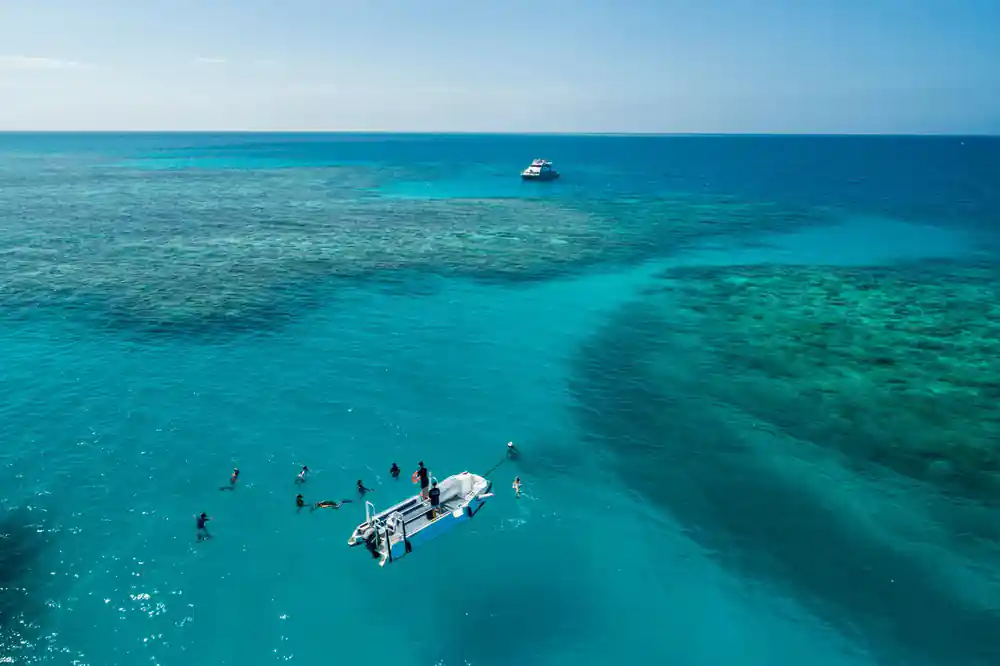
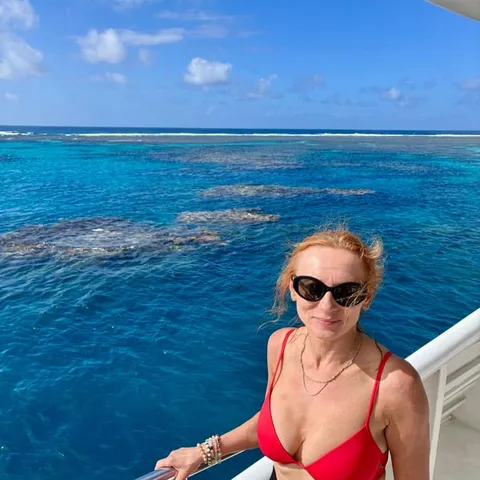
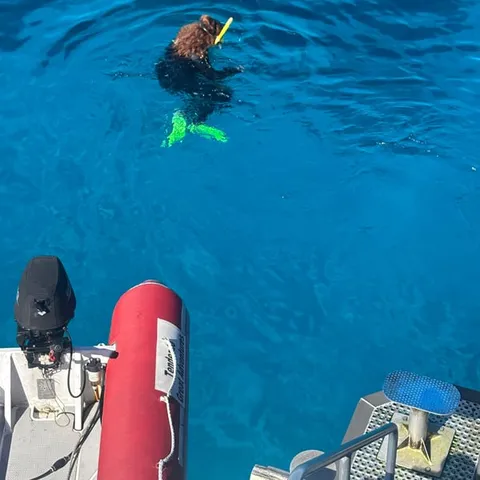
Sunlover’s Moore Reef pontoon sits 47 km offshore on the Outer Reef
A proper outer reef day from Cairns
Plan ahead
What outer reef actually means
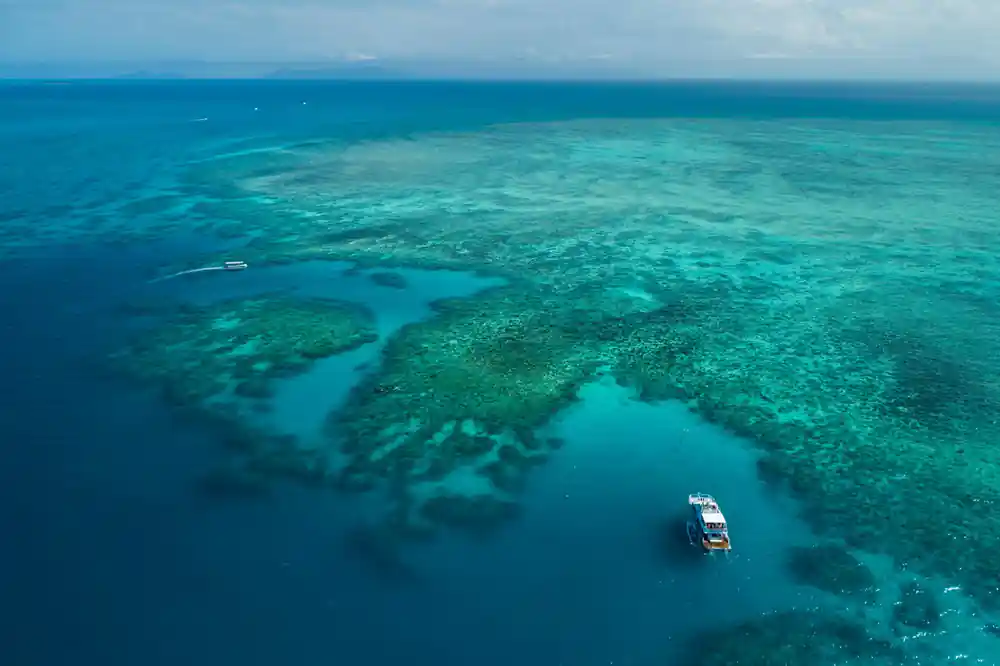
The Great Barrier Reef is not one uniform strip of coral. It spans more than 2,300 kilometres along the northeast coast of Australia and is made up of some 3,000 individual coral reefs.[8] The water off Cairns sits at the heart of this system, and the outer reef refers to the offshore reefs and cays that lie beyond the large continental islands. These are the places where the reef drops into the Coral Sea and where the water takes on a deep, saturated blue.
For a first-time visitor, the outer reef can feel abstract. In practice it means a longer boat ride, deeper water and coral structures that are more exposed to ocean swell. The tour booked from this site is a full-day commitment: it runs 8.5 hours to 1 day and follows a route through Upolu Reef and the Great Barrier Reef.[1] It is not simply a cruise to a platform; it is a day built around two reef settings away from the busy island jetties.
How an outer reef site differs from an island
Many Cairns day trips head to a continental island instead of the outer reef. Green Island sits 27 kilometres off Cairns and takes about 45 minutes to reach by catamaran.[9] Fitzroy Island is 29 kilometres south-east of Cairns and is 45 minutes away by ferry.[10] Both are lovely, but they are not the same experience as an exposed outer cay. An island gives you beaches, shade trees and walking tracks, while an outer reef site gives you coral right up to the surface and no sand to stand on.
That difference shapes how you spend the day. At an island you can beachcomb and snorkel from the shore; at an outer reef you enter the water from the boat or a small tender and let the current carry you along the reef. On this cruise you get a coral cay as well as an outer reef, so you have a taste of both: a place to stand briefly, and a reef wall to float over.[1]
The choice between island and outer reef comes down to your priorities. If you are travelling with young children or anyone who needs a beach, an island is easier. If you want to see coral at its most dramatic and do not mind a longer crossing, the outer reef is the reason you came to Cairns. This tour keeps both options in one itinerary, so you can weigh them in a single day.
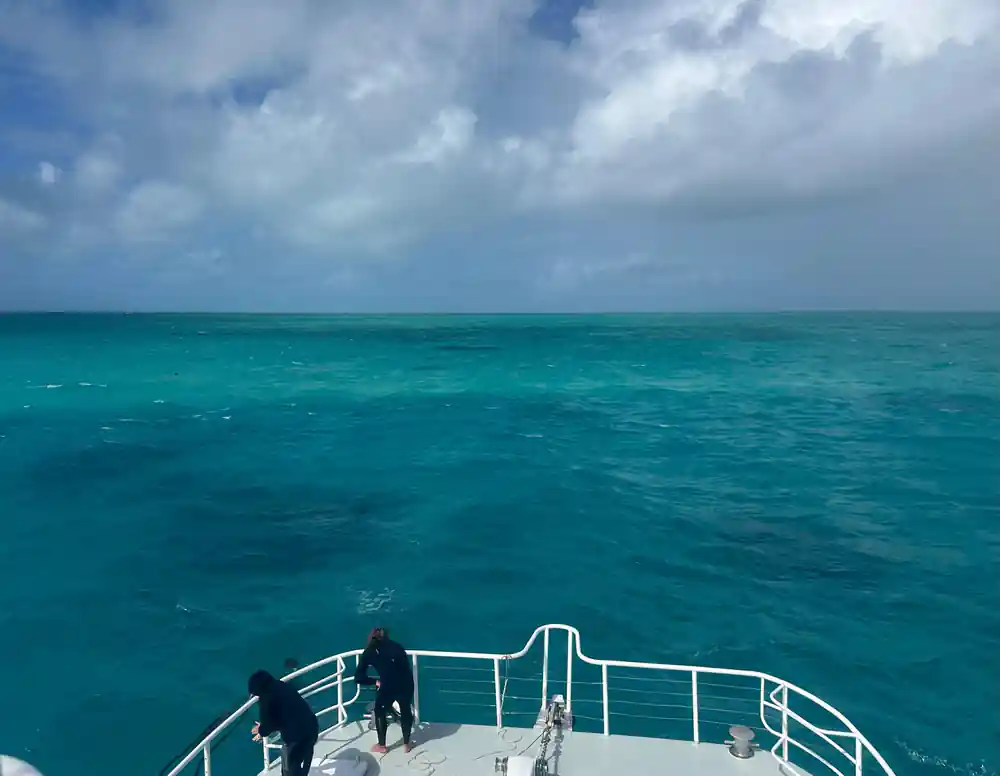
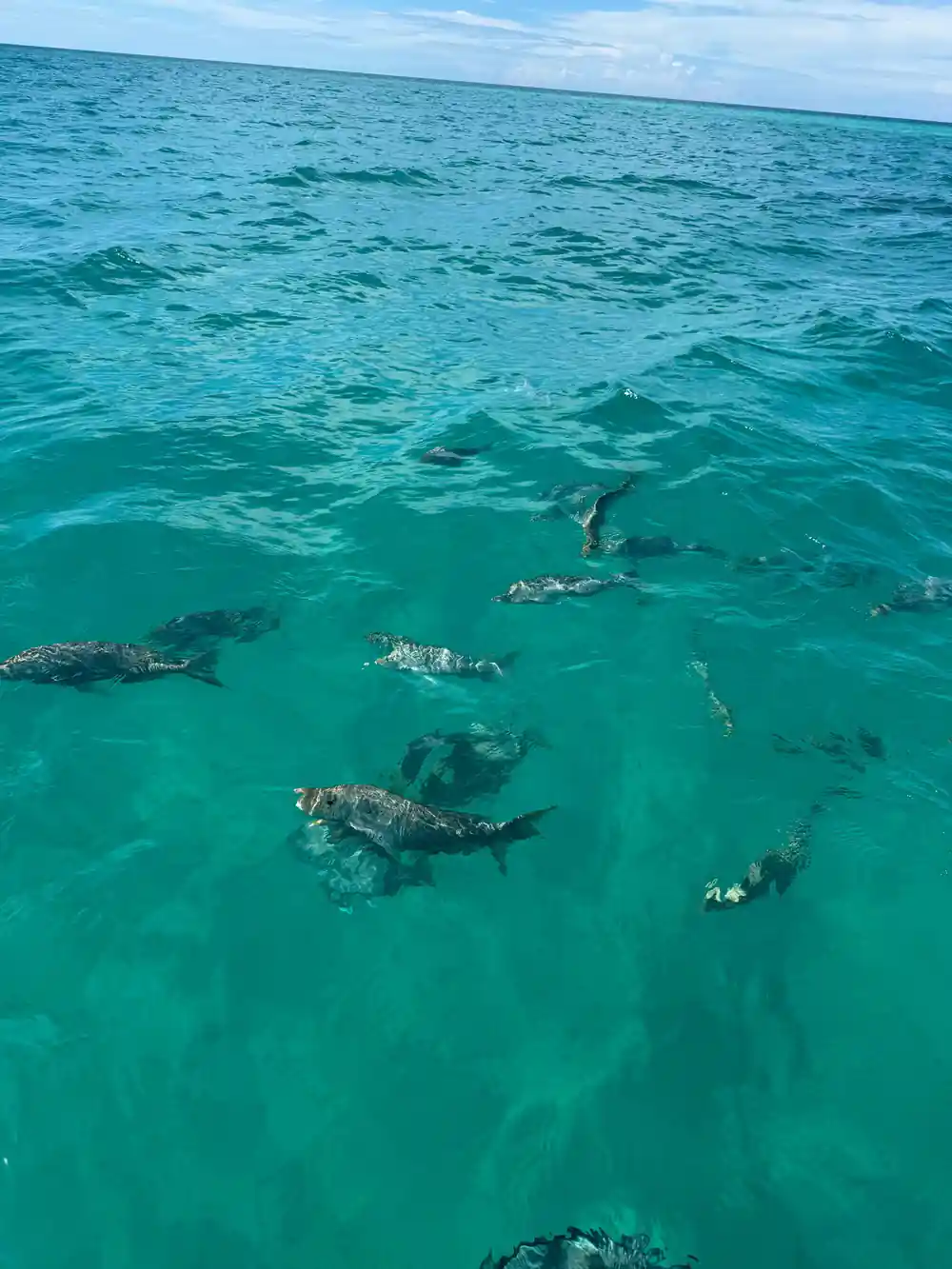
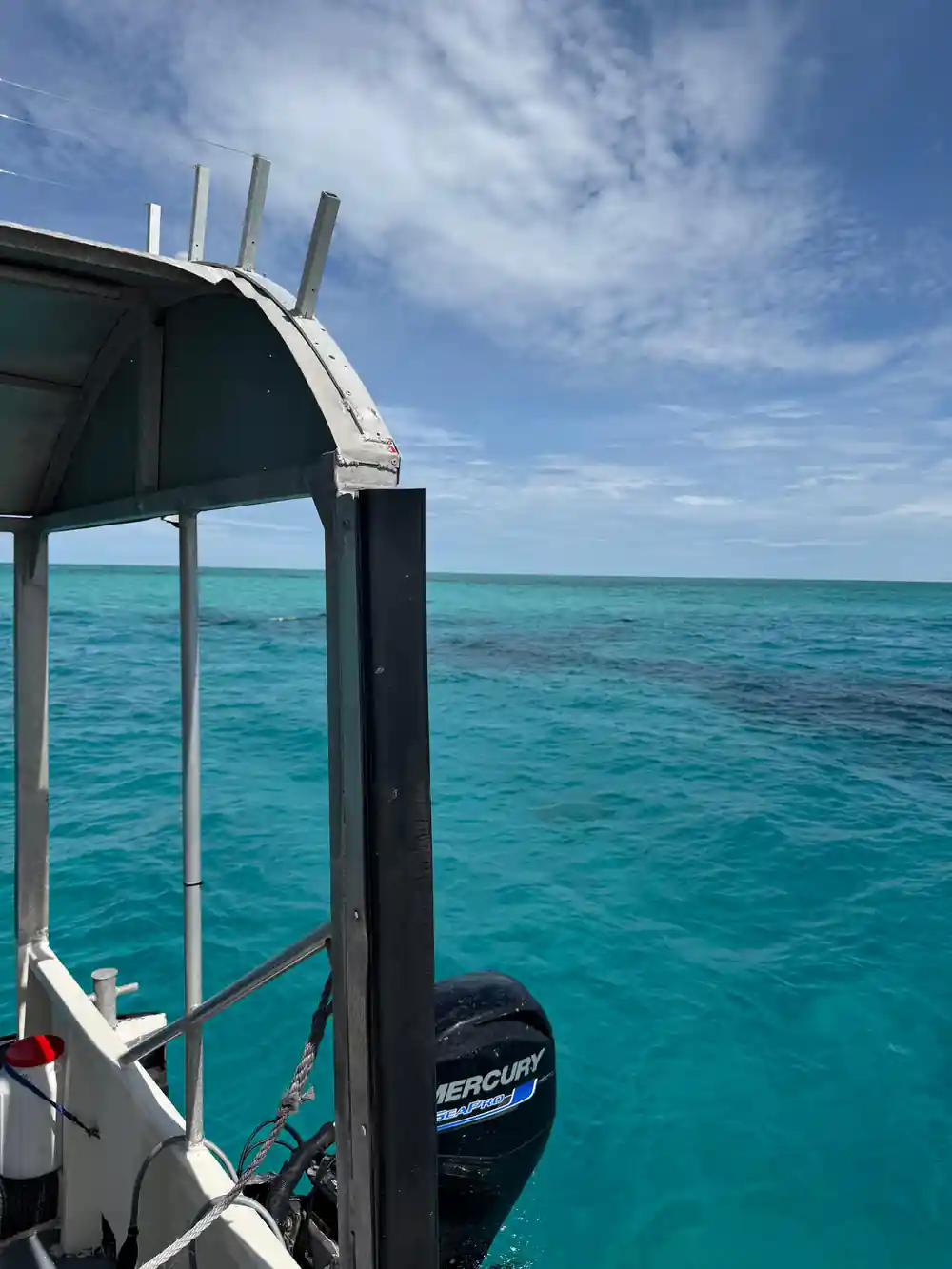
A coral cay and clear water, seen from the tour boat on the way out to the reef
The crossing to Upolu Reef
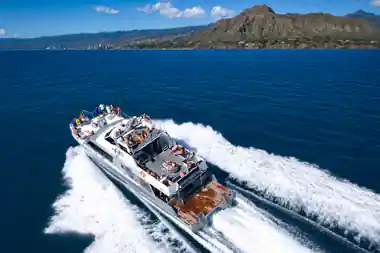
Getting to the outer reef takes patience, and the reward is a coastline that falls away behind you. The route heads for Upolu Reef, a named stop beyond the coastal islands where the water turns a deep, saturated blue.[1] The crossing is made on a modern, fully-sized catamaran, and on a clear morning you can watch the city skyline shrink, then turn forward again as the reef reveals itself as a band of pale turquoise.
The ride is part of the day, not just a transfer. As the boat clears the headland, the water shifts from coastal green to a deeper blue, and on calm mornings you may spot seabirds working the surface. If you are prone to motion, pick a seat near the middle of the catamaran and keep your eyes on the horizon. The outward leg is a slow settling-in; the reef waits for you.
What a guided snorkel involves
This cruise is led by an instructor who speaks English.[1] The route is structured around two named reef areas: Upolu Reef, the Great Barrier Reef, and then Upolu Reef again on the return.[1] That repetition is useful. If the current is strong on the first snorkel, the second visit gives you a chance to try a different line across the reef, or simply rest and take photos from the boat.
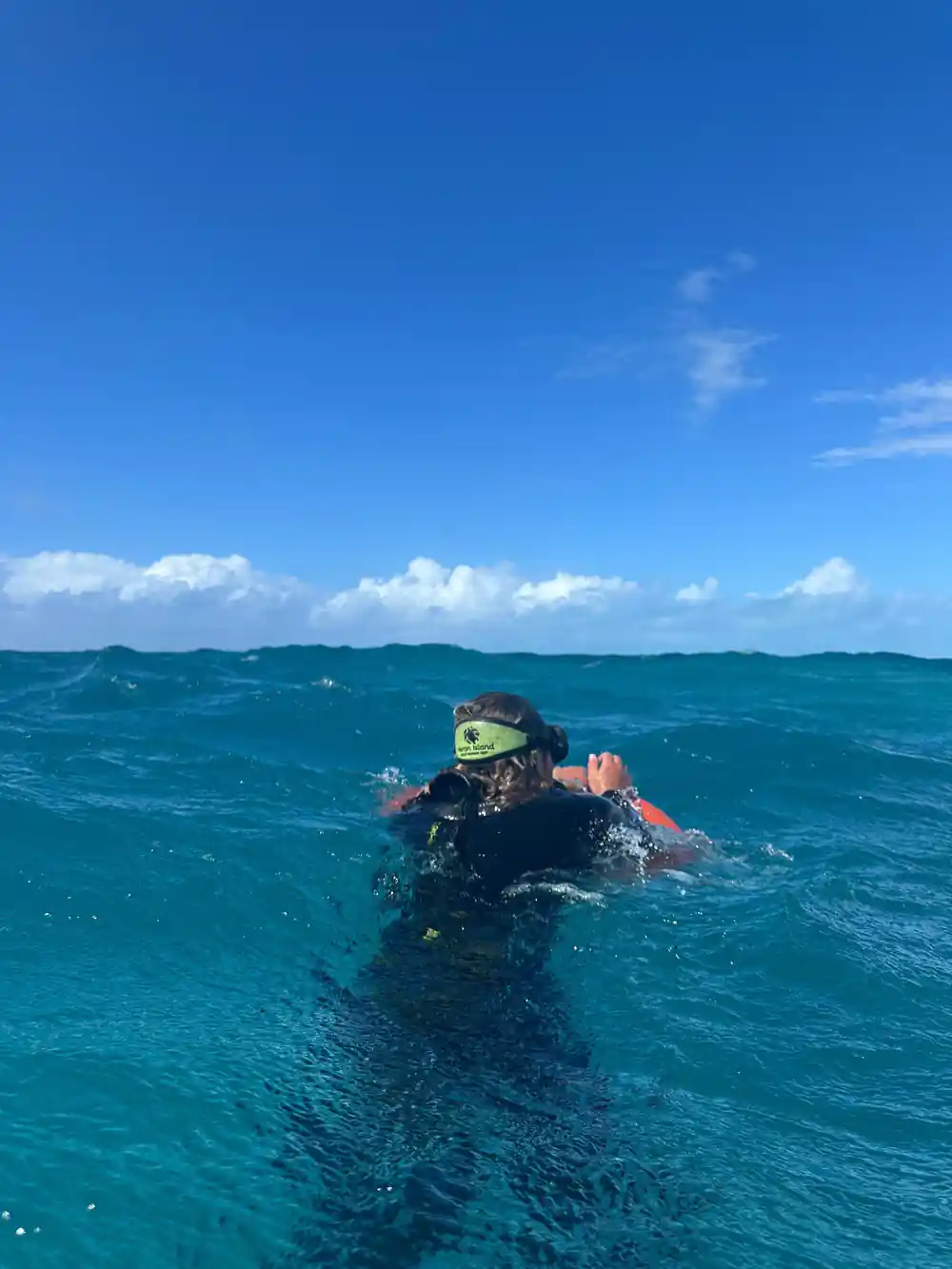
A guided snorkel is not a race. The crew watches currents and wind, and a guide points out coral formations, fish and turtles as you swim. You are free to float at your own pace, but there is always someone who knows the site keeping an eye on the group. During marine stinger season, which typically runs from November through to May, the risk from dangerous jellyfish is higher, so wear whatever protective suit the crew provides.[7]
You do not need to be a strong swimmer, but you should be comfortable floating in open water. The crew will help you into the water and keep the group together, and the instructor is there to answer questions in English.[1] If you are new to snorkelling, practise breathing through the mask before you leave the boat; the reef is much easier to enjoy when your equipment feels familiar.
from US$202
A full-day Outer and Coral Cay snorkel and dive cruise from Cairns, with an English-speaking instructor and free cancellation up to 24 hours ahead.[1]
Water temperature and seasons off Cairns
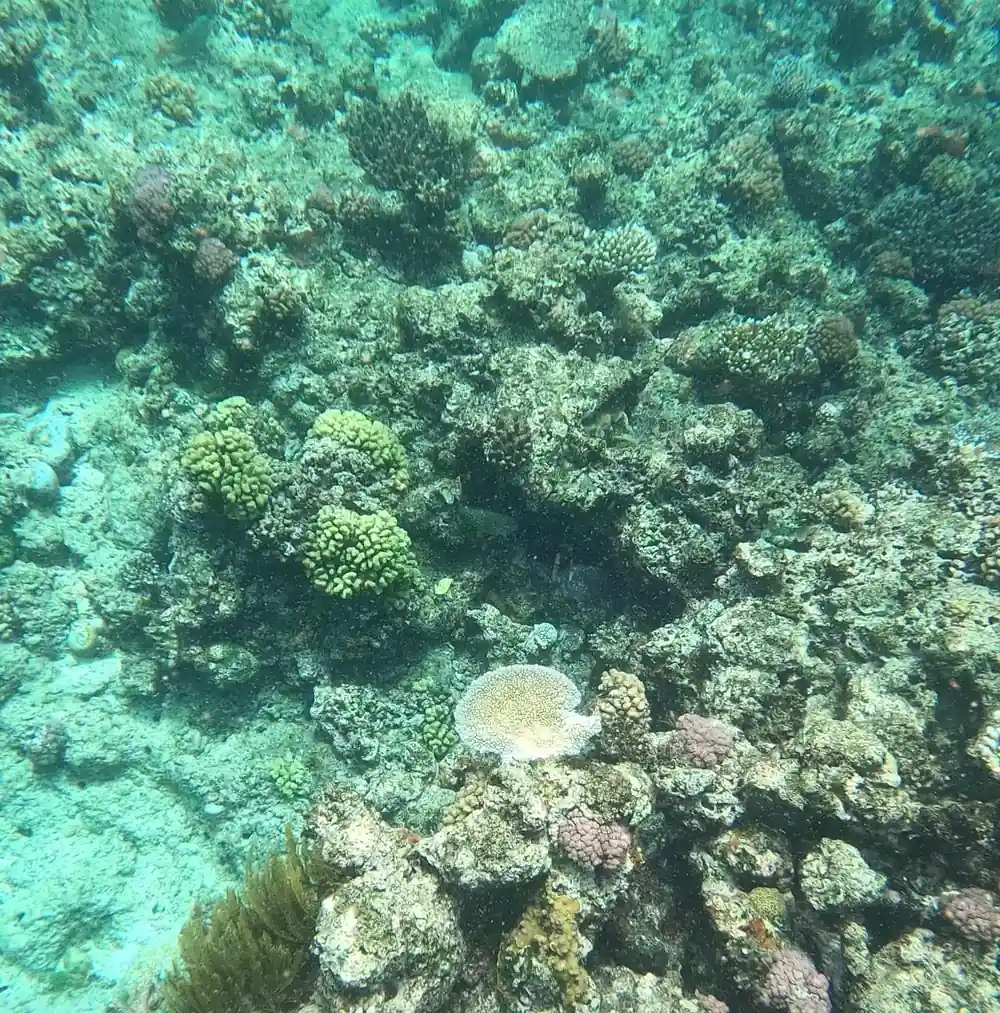
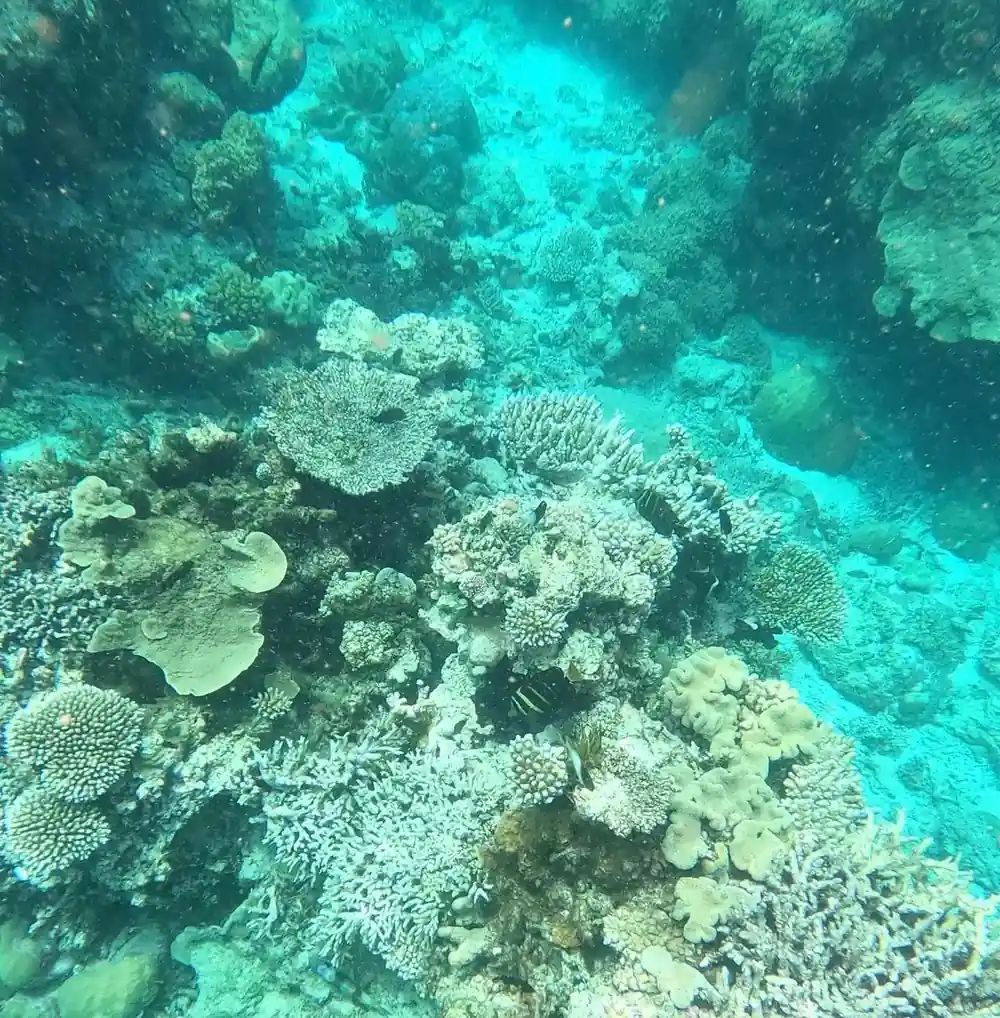
The water temperature on the reef off Cairns averages 29°C in summer, from December to February, and 24°C in winter, from June to August.[2] In practical terms, you can snorkel comfortably across the year, with a light protective layer rather than a thick wetsuit. On a settled day, the coral heads are easy to see from the surface, and the reef seems to hang in the water with individual bommies and gutters visible as separate shapes rather than a green blur.
Cairns has a dry season roughly from May to October and a wet season roughly from December to March.[5] The wet season is hot and humid, with frequent afternoon showers, while the dry season brings sunny skies, low humidity and warm, comfortable days.[5] For many travellers, the dry season is the easiest time to plan a reef day.
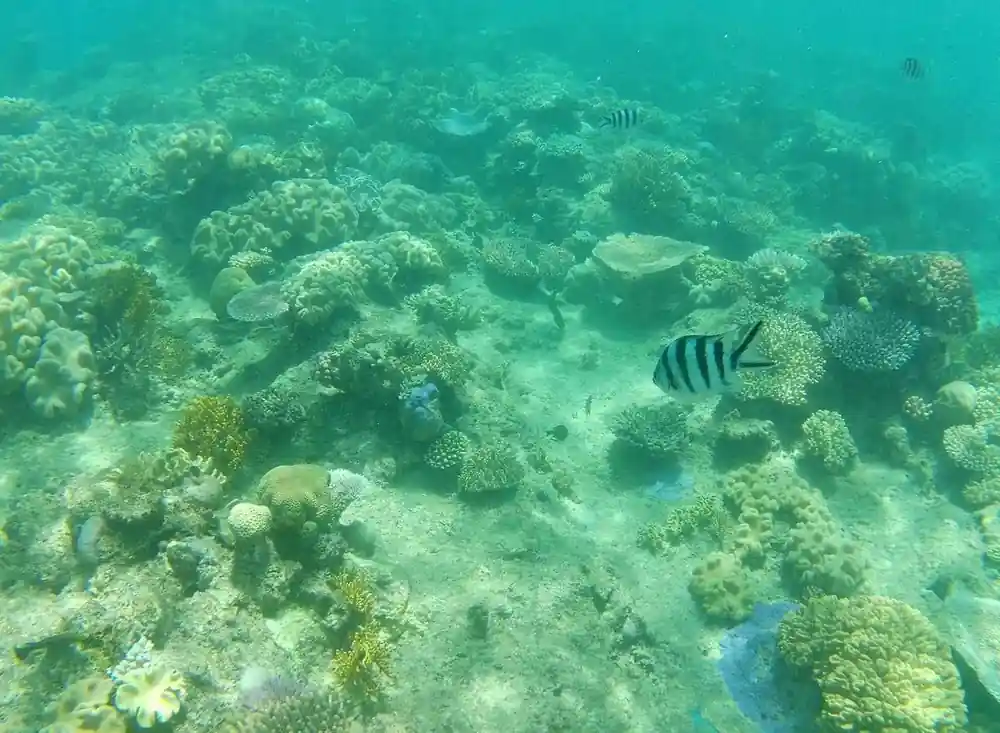
For photographers, a settled day is worth planning around. When the water is clear, an ordinary snorkel photo becomes a portrait of a reef, with parrotfish and bannerfish visible in the same frame. You do not need special kit; a basic underwater camera or phone housing can capture the colour, but give yourself time to float and watch before reaching for the shutter.
Two named reef stops
The route stops at named places rather than a generic patch of ocean. Upolu Reef is one of them, and it gives you the classic outer reef profile, with a steep wall of coral dropping into deeper water. The two settings sit close enough that you can compare them in a single day, yet they feel completely different under the water.
The appeal of this trip is seeing two reef settings in one day. You can float over the shallow coral gardens, then move to the greater reef where the fish life is busier. The route is described as: on foot, catamaran, Upolu Reef, Great Barrier Reef, Upolu Reef, catamaran.[1] On foot refers to the short walk to the boarding point in Cairns; from there the catamaran does the work.
Deciding if the longer trip is worth it
An outer reef day costs more and takes longer than an island hop. This tour is priced from US$202 and has a traveller rating of 4.81 from 1,592 reviews.[1] For comparison, a half-day snorkelling tour from Cairns starts at US$125 and lasts 4 hours.[11] The extra money buys time: time on the reef, time between snorkels, and time to watch the light change over a sand cay.
The longer format suits people who do not want to feel rushed. You have time for a proper swim, time to rest on the boat, and time to settle into the rhythm of the day. If you only have a short window in Cairns, a half-day trip may be enough; if you came to see the outer reef properly, the full day is where the trip earns its keep. Bring a rash vest, a dry change of clothes and a sense of patience, and the reef will do the rest.
Also remember that the Great Barrier Reef Environmental Management Charge for a full-day passenger is $8.50 per day.[12] Some operators include this in the advertised total; if you do not see it on your booking, ask before you go. No extra planning is stressful if you know the charge is coming.
Distance from Cairns to reef spots
Compare reef trip prices
From-prices for GetYourGuide listings:[1],[3],[4],[14],[11].
When to go and book
How to book your reef day
Choose your date
Book with reserve now and pay later, and remember you can cancel up to 24 hours in advance for a full refund.[1]
Check in at the terminal
Head to the Reef Fleet Terminal at 1 Spence Street in Cairns.[6]
Ride out to Upolu Reef
Settle into the catamaran for the crossing to the outer reef. Watch the skyline shrink as you head offshore, and get your mask ready for the first stop.
Snorkel and dive
Your route stops at Upolu Reef and the Great Barrier Reef, with an English-speaking instructor.[1]
Return to Cairns
The full experience runs 8.5 hours to 1 day, so plan a relaxed evening after.[1]
Ready to trade the shore for the outer reef?
from US$203Reserve now & pay later