The quick version
- The Outer and Coral Cay Snorkel and Dive Cruise starts from US$202 and runs for 8.5 hours to 1 day from Cairns.[1]
- The Moore Reef pontoon sits 47 km offshore on the Outer Reef. Plan for a proper day on the water.[2]
- In tropical Queensland the marine stinger season typically runs from November through to May, when jellyfish risk is higher.[3]
- Reef water temperatures off Cairns average 24°C in winter (June to August) and 29°C in summer (December to February).[4]
- The coral cay of Green Island lies 27 km east of Cairns, about 45 minutes away by boat.[5]
- Top choice Outer and Coral Cay Cruise from US$202 Duration8.5 hours - 1 day[1]GuideInstructor: English[1]CancellationFree cancellation 24 hours in advance[1] Check availability
- Outer Reef Full-Day Tour from US$193 Duration8.5 hours[6]GuideEnglish, Japanese, Chinese, German[6]CancellationFree cancellation 24 hours in advance[6] See this tour
- Silverswift from US$216 Duration8 hours[7]GuideInstructor: English[7]CancellationFree cancellation 24 hours in advance[7] See this tour
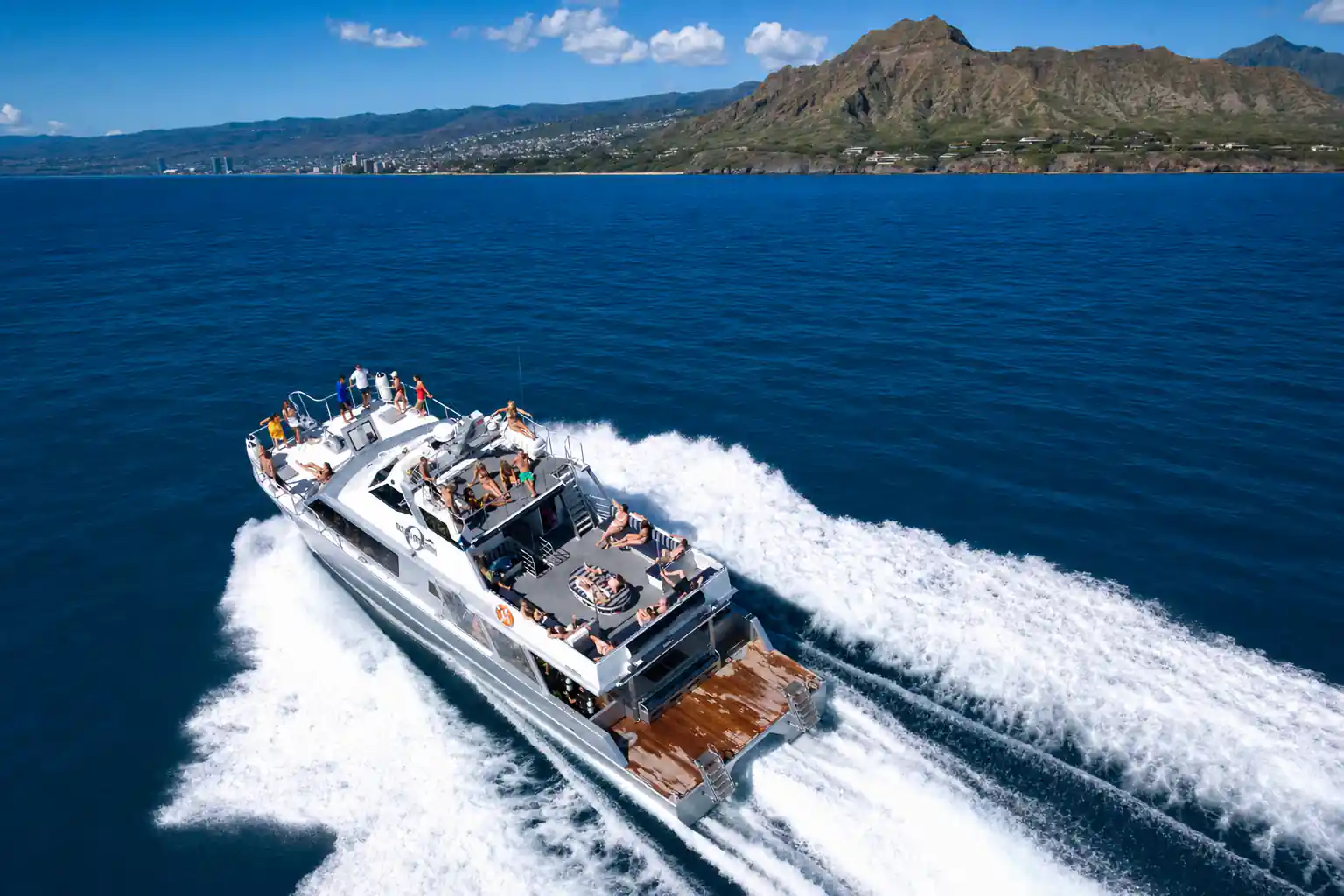
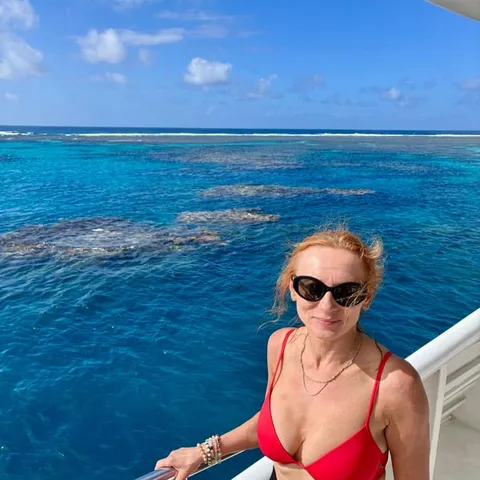
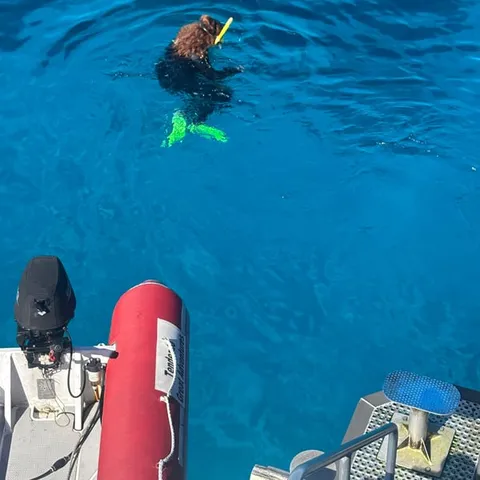
While marine stingers may be present throughout the entire year in tropical Queensland, the risk associated with these two types of potentially dangerous jellyfish are higher during the ‘marine stinger season’ that typically runs from November through to May.
Pack light, trust the boat, and save space for sunscreen
What the cruise usually handles
What to bring yourself
- Sunscreen, sunglasses and a wide hat for the deck.
- A towel and a warm layer for the ride back.
- Money if you want drinks, photos or souvenirs.
- Motion sickness tablets if you are prone to seasickness.
Snorkelling gear, all included
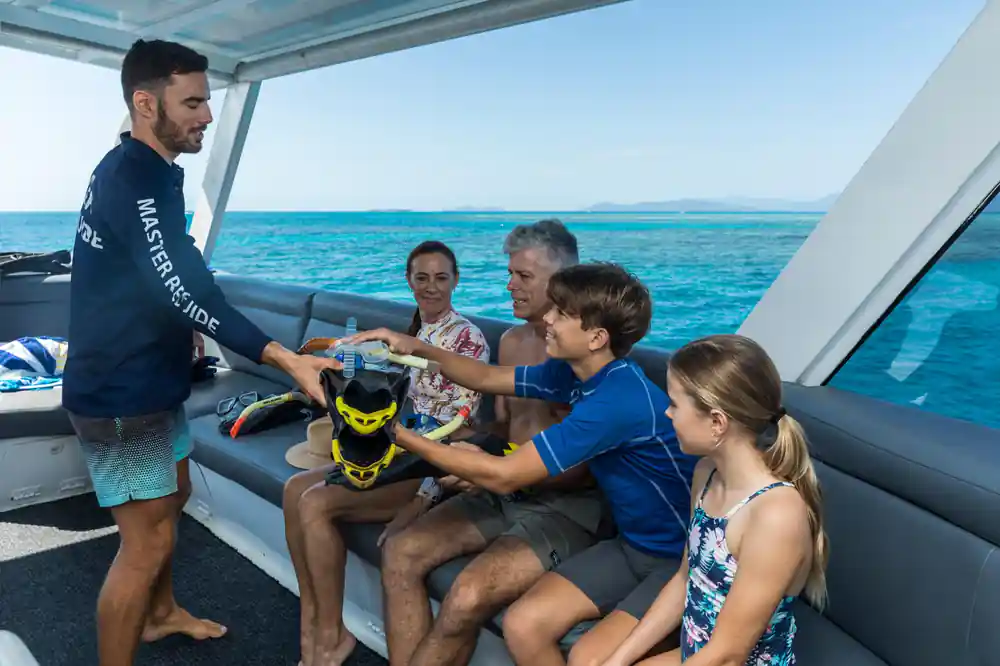
Most day cruises to the Great Barrier Reef from Cairns are set up so you can step off the boat and into the water without carrying much. The Outer and Coral Cay Snorkel and Dive Cruise, the tour booked from this site, lists an English-speaking instructor and a route that takes in Upolu Reef and the Great Barrier Reef before returning by catamaran.[1] The crew is used to first-time snorkellers, so they will help with fitting masks, adjusting fins and explaining the best places to enter the water. A relaxed start makes a real difference once you are floating face down over coral.
Before you book, check the listing to see what gear is included. Operators usually provide the basics, but it is always worth confirming. If you have a mask that fits well and has never leaked, bringing it can make the day more comfortable. If not, trust the boat's own gear and spend a few minutes getting the fit right. A mask that sits too tight will leave marks, while one that is too loose will let water in. The crew wants you to see clearly underwater, so do not be shy about asking for a different size or style.
It also helps to arrive with your swimwear already on under a shirt and shorts. That saves queueing for a changing room and gives you more time to settle in, find a spot on the deck and listen to the safety briefing without rushing.
Prescription masks on board
If you wear glasses or contact lenses, you may wonder about seeing clearly underwater. Many Cairns reef vessels carry a small collection of prescription masks, but not every mask suits every prescription. The practical move is to ask the operator when you book, or bring your own prescription mask if you have one. A short phone call or a message through the booking page can answer this before you pack.
Contact lens wearers often prefer to keep their lenses in and use a standard mask, while others like a prescription mask to avoid any chance of losing a lens in the sea. There is no single right answer. Test your setup before the boat leaves so you are not adjusting straps on a moving deck. Salt water and wind can make eyes feel dry, so a small bottle of lens-safe drops can be useful to keep in your bag for after the swim.
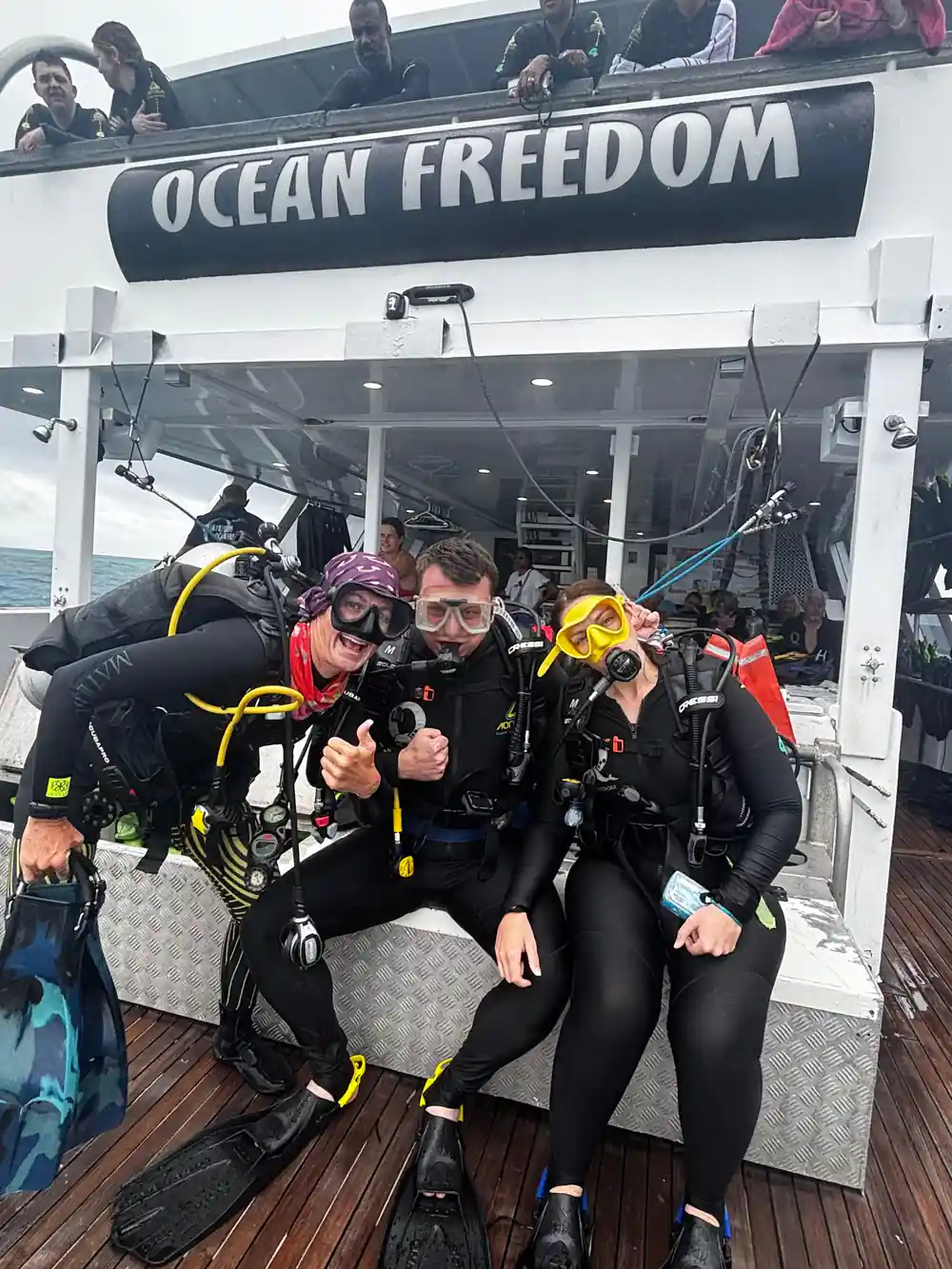
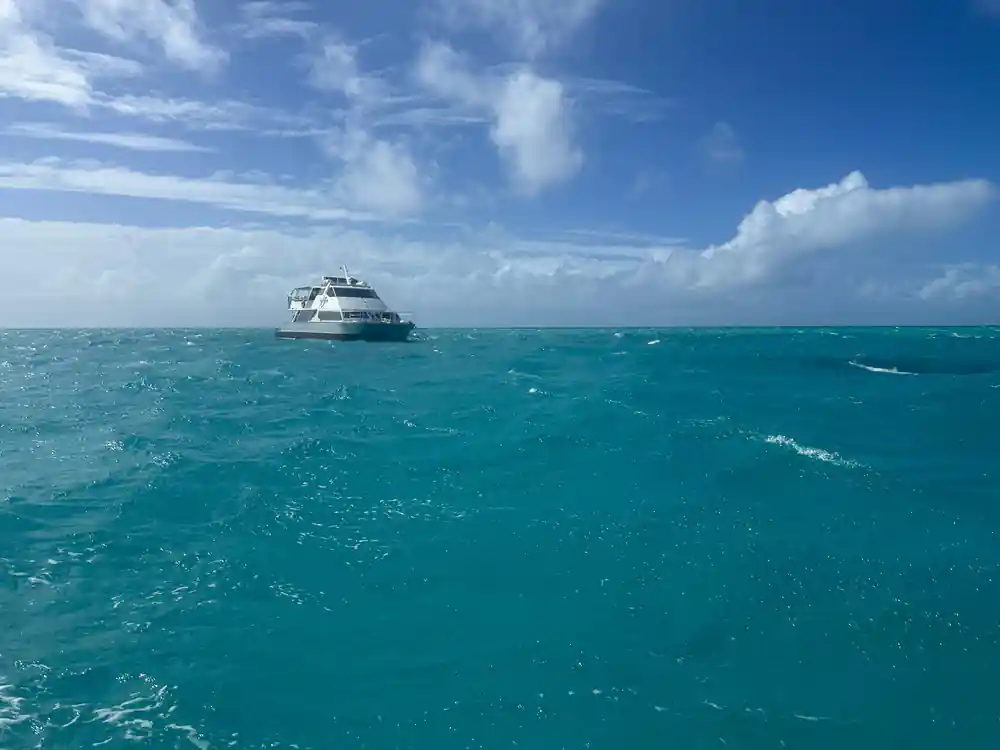
A catamaran heads out from Cairns toward the outer reef on a clear morning.
What a stinger suit is for
A stinger suit is a thin lycra layer worn over your swimwear. It does not keep you warm. Its job is to reduce the chance of a painful sting from the small jellyfish that can appear in tropical Queensland waters. The risk is higher during the marine stinger season, which typically runs from November through to May.[3] The suit covers your arms, torso and legs in a smooth layer that makes it harder for stinging cells to reach your skin.
Reef operators often provide stinger suits or wetsuits as part of the day, especially in warmer months. Even when stingers are less active, a lycra suit can be useful as sun protection and a little extra warmth. Ask what is available when you check in, and do not feel shy about wearing one if the crew offers it. Snorkellers of all ages wear them, and they are especially practical if you are fair-skinned or plan to spend long stretches in the water.
Stinger season in Cairns
Cairns has two main seasons. The dry season runs from May to October, bringing sunny skies, low humidity and warm days. The wet season is roughly December to March, with hot, humid weather and frequent afternoon showers.[8] The marine stinger season overlaps the warmer months, typically running from November through to May.[3] That overlap is why crews talk about stinger suits so often during the Australian summer.
That does not mean you should avoid the reef in summer. It means you should take the season seriously. Wear the protective layer provided, follow crew instructions, and pay attention to any stinger warning signs on the beach or boat. A little preparation keeps the focus on the coral, fish and turtles. The water can feel wonderfully warm in those months, and the reef remains busy with life, so a sensible approach lets you enjoy it fully without worrying.
from US$202
The Outer and Coral Cay Snorkel and Dive Cruise from Cairns starts from US$202.[1]
Wetsuits, provided seasonally
Reef water temperatures off Cairns average 24°C in winter and 29°C in summer.[4] In winter, a wetsuit or stinger suit can make the first snorkel much more pleasant. In summer, the water is warm enough for many people to swim in just a swimsuit, though a lycra layer still offers sun and sting protection. Your own comfort matters more than what anyone else is wearing.
Operators often provide wetsuits seasonally, but availability can vary between boats and trips. If you feel the cold easily, bring your own thin wetsuit or a rash vest. The crew will also tell you what the water feels like on the day, so ask before you gear up. A useful habit is to take a slightly thicker layer on a winter trip, even if the sky looks bright, because your body cools down quickly when you stay still while snorkelling.
What to bring yourself
A reef day is more enjoyable when you pack thoughtfully. Sunscreen, a hat, sunglasses and a light shirt are essential under the tropical sun. A towel, a change of clothes and a dry bag help you stay comfortable on the ride home. If you are prone to seasickness, take motion sickness tablets before the boat leaves. It is easier to prevent the feeling than to recover from it once the boat starts moving.
Boats from Cairns depart from the Reef Fleet Terminal at 1 Spence Street.[9] Arrive with time to check in and find your vessel. The Moore Reef pontoon sits 47 km offshore on the Outer Reef.[2] Keep your camera or phone in a waterproof pouch, and remember that sunscreen washes off the moment you enter the water. Reapply when you climb back on board.
Fresh water showers on board
After snorkelling in salt water, a fresh water rinse feels wonderful. Many Cairns reef boats have a deck shower or hose so you can wash off before drying off. It also helps keep your gear and towel from getting crusty with salt. A quick rinse can make the return trip much more comfortable, especially on a breezy day when salt spray and damp swimwear can chill you.
Make use of the shower if there is one, then change into dry clothes for the return trip. The Outer and Coral Cay cruise returns to Cairns after a day on the water, so a clean change of clothes and a light jacket are smart additions to your bag.[1] Slip-on shoes are handy too, because your feet will be tired after a day on deck and you do not want to fuss with laces while carrying snorkel gear.
Distance from Cairns to popular reef stops
Distances from Cairns: Green Island 27 km[5], Fitzroy Island 29 km[10], Moore Reef pontoon 47 km offshore[2].
Compare US dollar from-prices for Cairns reef cruises
US dollar from-prices from GetYourGuide tour listings:[1],[6],[7].
When to book your Cairns reef day
Getting ready
Choose your cruise
Pick a trip that matches your pace. The Outer and Coral Cay cruise runs for 8.5 hours to 1 day.[1]
Check what is included
Read the listing for gear, meals and guide language so there are no surprises on board.
Plan for stinger season
From November to May, jellyfish risk is higher. Wear the protective layer provided.[3]
Pack the extras
Sunscreen, towel, dry clothes and any seasickness tablets you might need.
Arrive early
Reef boats leave from the Reef Fleet Terminal at 1 Spence Street, Cairns.[9]
Get on board
Find a spot, listen to the safety briefing and enjoy the ride to the reef.
Ready for a day on the reef from Cairns?
from US$203Reserve now & pay later