The quick version
- The Outer and Coral Cay cruise from Cairns is led by an English-speaking instructor, scores 4.81 from 1,592 reviews, and can be cancelled up to 24 hours in advance.[1]
- Marine stinger season in tropical Queensland typically runs November through to May.[2] A lightweight lycra suit is a simple way to cover up in those months.
- Clear water makes it easier to relax, and the dry season from roughly May to October is the classic window for a reef day.[3]
- The dry season runs roughly May to October, while the wet season runs roughly December to March.[3] Plan around afternoon showers if you travel in the wet season.
- Sunlover's Moore Reef pontoon sits 47 km offshore on the Outer Reef.[4] Cairns reef boats leave from the Reef Fleet Terminal at 1 Spence Street.[5]
- Top choice Outer and Coral Cay from US$202 Duration8.5 hours to 1 day[1]Rating4.81[1]LanguageEnglish[1]StopsUpolu Reef[1] Check availability
- Outer Reef Full-Day from US$193 Duration8.5 hours[6]Rating4.72[6]LanguageEnglish, Japanese, Chinese, German[6]StopsSaxon Reef and Hastings Reef[6] See this tour
- Silverswift from US$216 Duration8 hours[7]Rating4.71[7]LanguageEnglish[7]Stopsseveral reef sites[7] See this tour
While marine stingers may be present throughout the entire year in tropical Queensland, the risk associated with these two types of potentially dangerous jellyfish are higher during the ‘marine stinger season’ that typically runs from November through to May.
Snorkelling is safe when you choose a guided, well-reviewed trip
Before you board
- Meet at the Reef Fleet Terminal, Cairns
- Ask about lycra suits in stinger season
- Pack sunscreen, a hat and a light cover-up
- Book a tour with free cancellation
On the water
- Keep your eyes on the horizon on the crossing
- Follow the instructor's signals
- Use a float vest if you want extra support
- Rinse gear and reapply sunscreen between snorkels
Is it safe to snorkel in Great Barrier Reef?
The short answer is yes, when you go with a reputable operator and follow your guide's advice. The Cairns Outer and Coral Cay Snorkel and Dive Cruise is a good example: it is led by an English-speaking instructor, departs from the Reef Fleet Terminal at 1 Spence Street, and lets you cancel up to 24 hours in advance for a full refund.[1][5] A structured day like this removes most of the guesswork. You know where to meet, who is in charge, and what the plan is before you get on the boat.
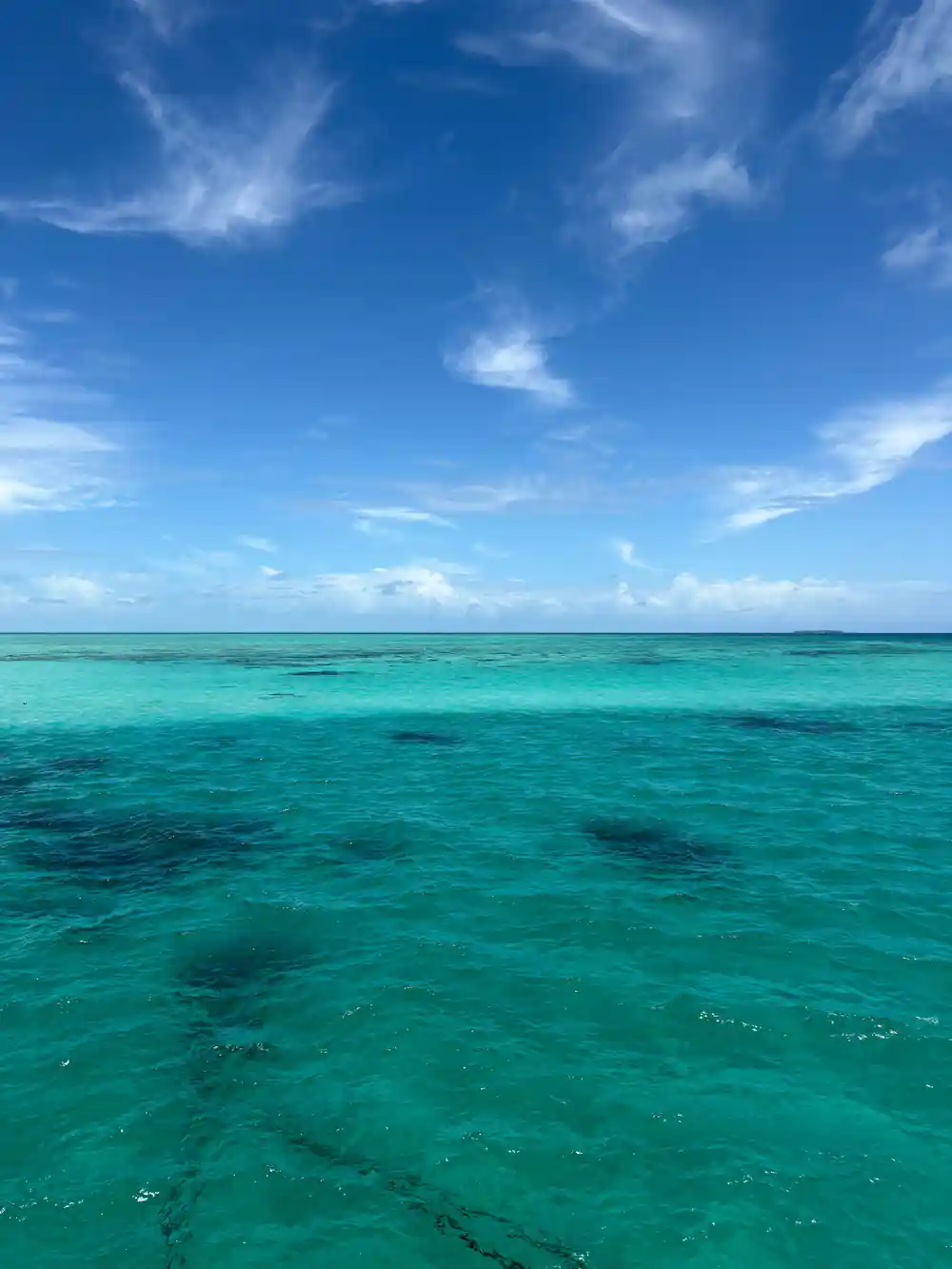
The reef itself is vast, and that is part of the safety picture. It spans more than 2,300 kilometres along the northeast coast of Australia and is made up of some 3,000 individual coral reefs.[8] Recent monitoring shows the northern section's hard coral cover increased from 30.0% in 2025 to 35.1% in 2026.[9] The dry season, from roughly May to October, is the classic window for a day on the water.[3] When the conditions are calm and the water is clear, it is easier to relax and enjoy the swim.
What a guided drift snorkel actually involves
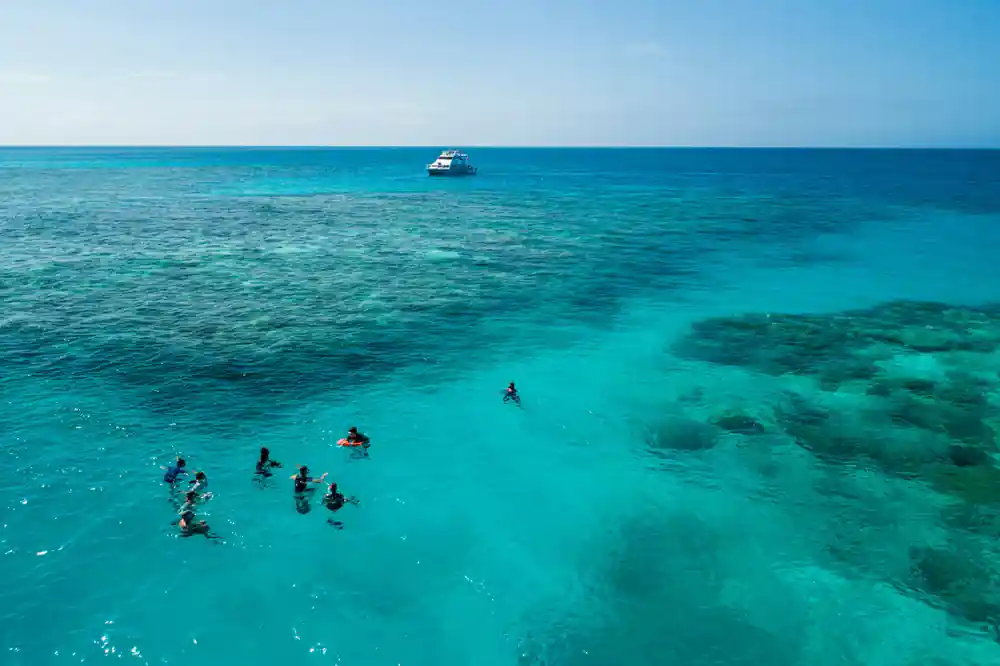
On a drift snorkel, you enter the water upstream of a reef and let the current carry you across it. You spend less energy fighting the sea and more time watching what is below. The Outer and Coral Cay cruise follows this pattern, with Upolu Reef among its stops.[1] Upolu Cay is a small, low sand cay, and the route around it gives you a clear, manageable swim with an obvious end point. For many people, that makes it the perfect introduction to reef snorkelling.
A coral cay stop gives you an easy entry from shallow sand beside the reef, which is reassuring for less confident swimmers. The tour's itinerary lists a catamaran crossing, Upolu Reef, the Great Barrier Reef and Upolu Reef again before returning.[1] You also get the wider sense of the Great Barrier Reef as a system, not just a single wall of coral. The reef runs for more than 2,300 kilometres, with roughly 3,000 individual reefs.[8] Being on a guided boat is the easiest way to see a small, safe part of it.
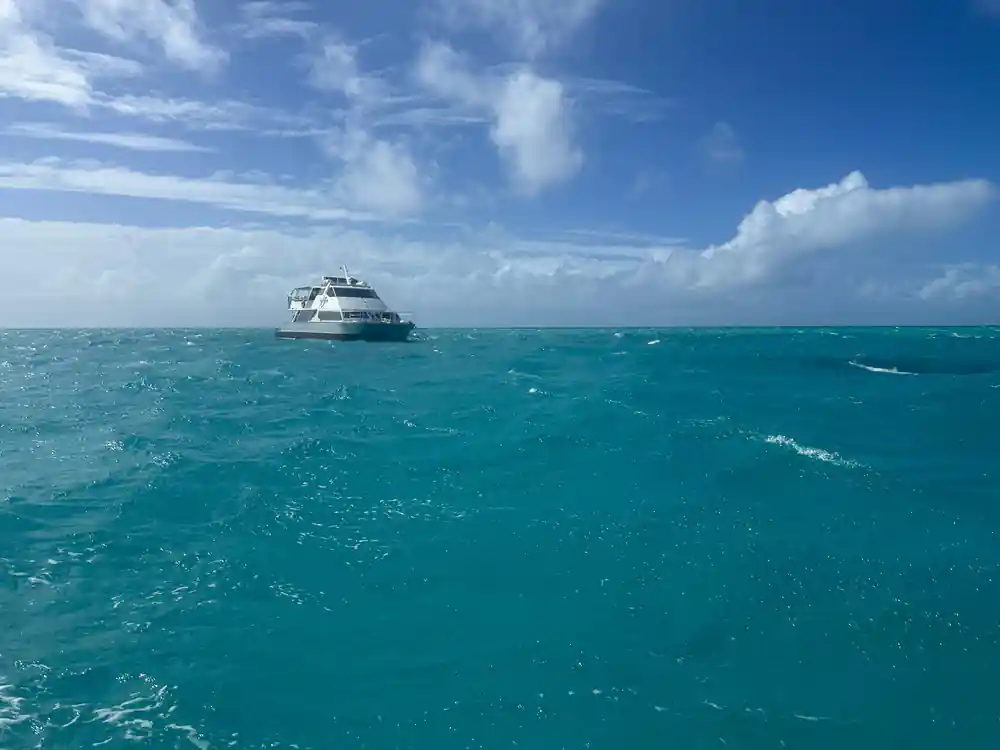
A catamaran crossing from Cairns gives you time to spot the reef from above before you slip into the water.
Marine stingers and the lycra suit
Tropical Queensland has a marine stinger season that typically runs November through to May.[2] Risk from potentially dangerous jellyfish is higher then, although stingers may be present year-round. A lightweight lycra suit is a simple extra layer during stinger season; it is not a dive suit, but it covers your arms and legs and makes you feel less exposed. If you are prone to worrying, this one piece of gear can change the whole day.
Water temperature on the reef averages 29°C in summer (December to February) and 24°C in winter (June to August).[10] In the cooler months, a thin wetsuit can keep you comfortable and add a little buoyancy. In the warmer months, a lycra suit or a sun shirt is often enough. Ask your operator what they recommend when you book, and again at check-in, so you pack the right layer for the day's conditions.
Reef sharks: what you might see
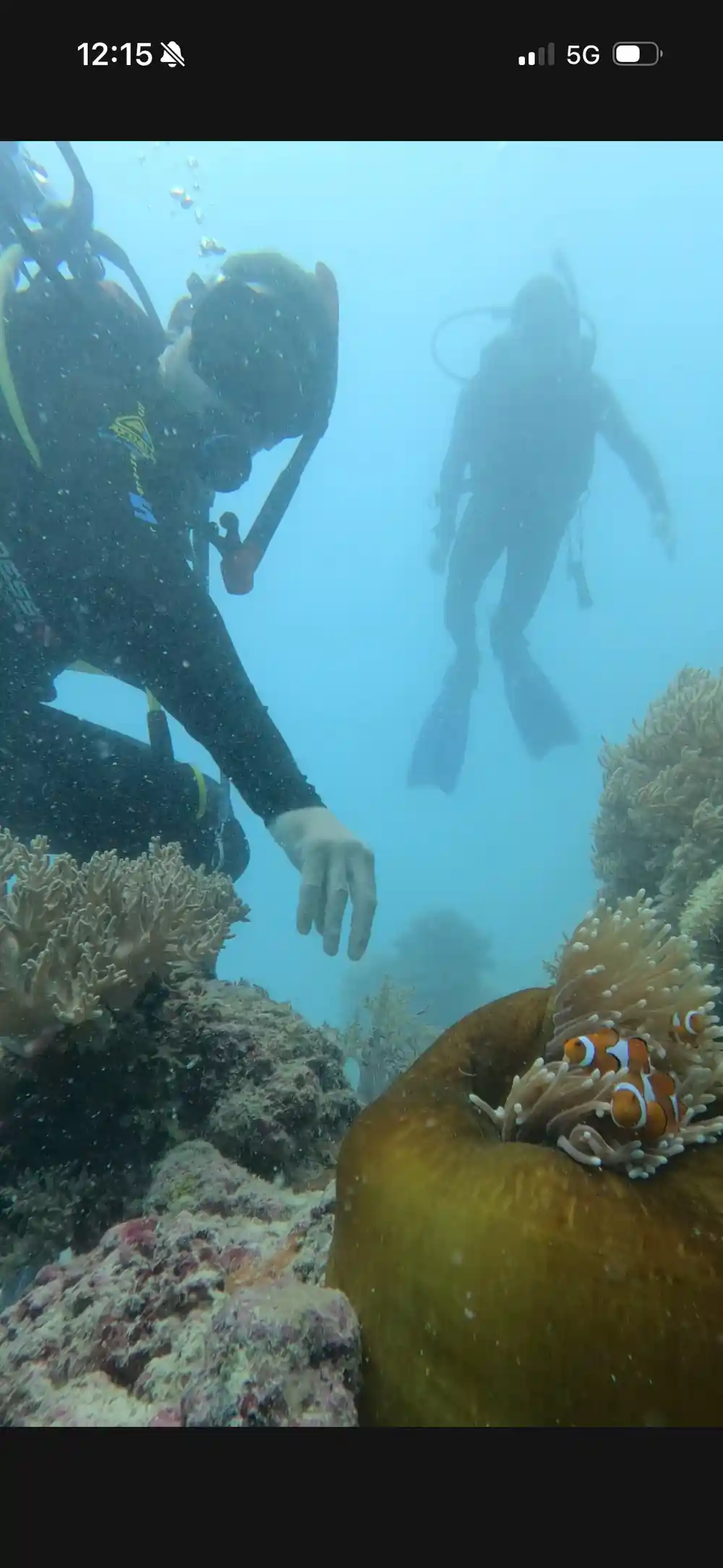
Snorkellers often ask about sharks. The Great Barrier Reef is home to many fish and shark species, and you may see a reef shark cruising over sand or coral. Most reef sharks are shy and prefer to keep their distance. The reef system includes some 3,000 individual coral reefs.[8] Sharks have plenty of space, and a snorkeller splashing at the surface is not interesting to them. If you see one, count yourself lucky; it is a sign of a healthy reef.
The best way to feel confident is to keep your movements calm. Splashing is more likely to attract curiosity than a slow, easy snorkel stroke. If a shark appears, enjoy the sight, stay still, and let it pass. Your guide in the water will set the pace and can signal if anything needs your attention. You do not need to be a strong swimmer, but you do need to stay relaxed and follow the plan.
from US$202
A Cairns reef day that reaches Upolu Reef by catamaran, with free cancellation up to 24 hours in advance.[1]
Getting tired in open water and guides in the water
Fatigue is a real question for first-timers. A drift snorkel lets the current carry you along, and you use less energy than you would swimming against the sea. The Outer and Coral Cay cruise can run 8.5 hours to 1 day, so there is time to rest between snorkels.[1] It has an English-speaking instructor on board.[1] For anyone worried about tiredness, that extra pair of eyes is reassuring.
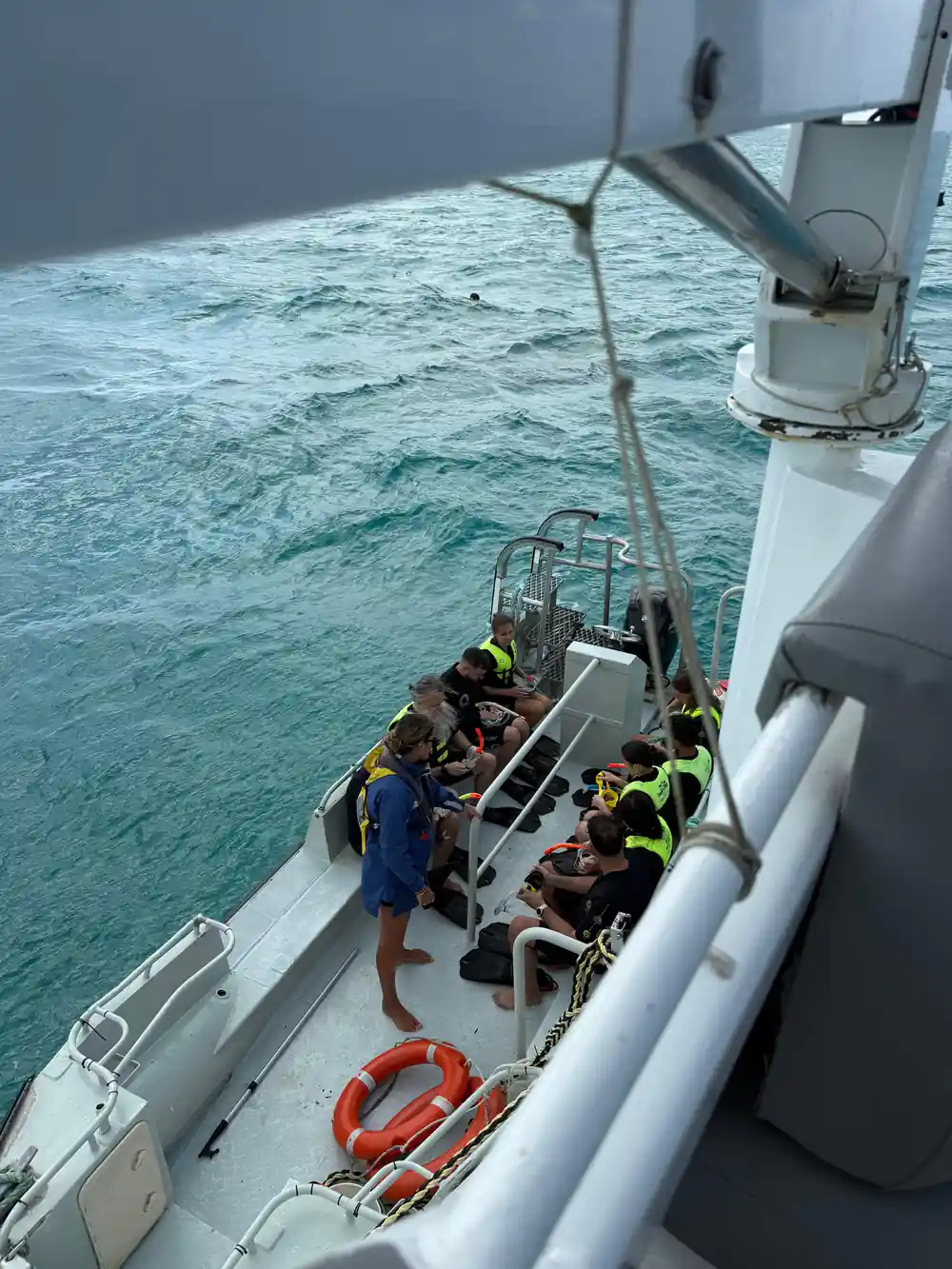
Pace yourself. You do not have to be the first person in the water or the last person out. If you would like a float vest or life jacket, ask at check-in. A guided snorkel is led by people who know the site; follow them and conserve energy. Spend the surface intervals on deck, drinking water and letting your legs recover. The goal is to enjoy several relaxed swims, not one exhausting one.
Sun at this latitude
The tropical sun is strong, and water reflects it from below as well as above. Cairns has a dry season roughly from May to October and a wet season roughly from December to March.[3] Dry-season days are often sunny and comfortable, while wet-season afternoons can bring heavy showers. Plan for sun in both seasons. Use reef-safe sunscreen, wear a hat or hood, and cover up between snorkels, especially on the back of your neck and shoulders.
The water itself is warm, averaging 24°C in winter and 29°C in summer.[10] That warmth can make you forget how much sun you are absorbing. A lightweight sun shirt or lycra suit is useful in any season, and it reduces the amount of sunscreen you need to keep reapplying. Reapply sunscreen after each time you come out of the water. Your nose, ears and feet are easy to miss.
The crossing and seasickness
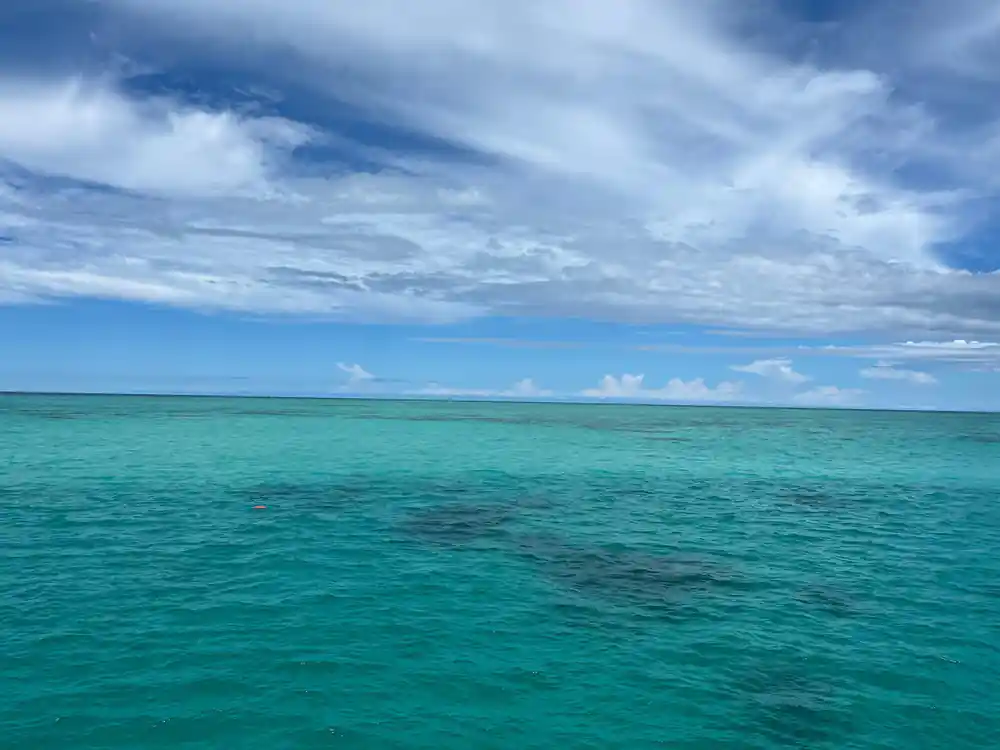
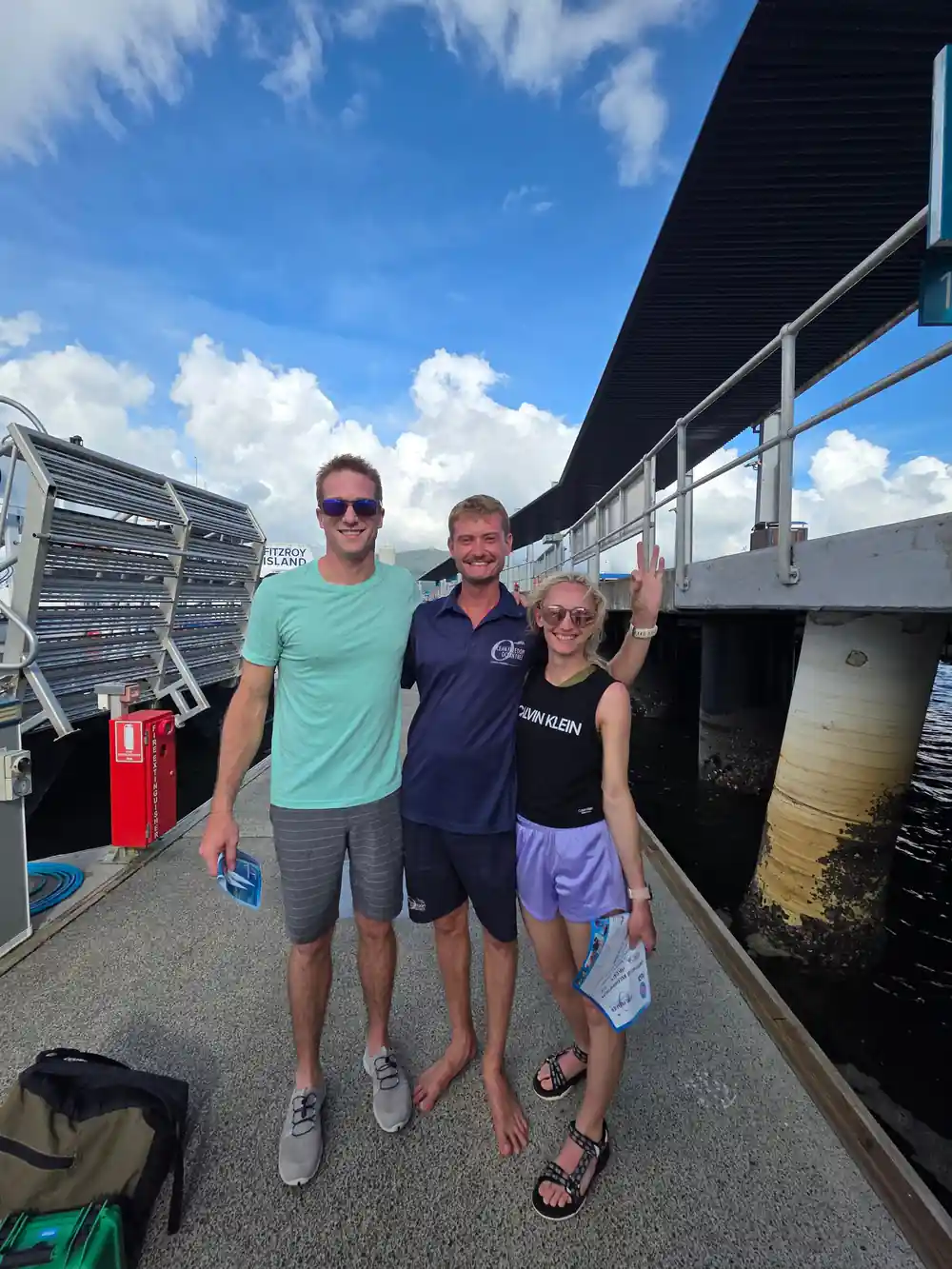
Reef boats from Cairns leave from the Reef Fleet Terminal at 1 Spence Street.[5] The crossing takes you out to a stable pontoon on the Outer Reef, with time to settle in, watch the coastline disappear, and spot the first changes in water colour. Sunlover's Moore Reef pontoon sits 47 km offshore.[4] If you are worried about motion, choose a seat on deck rather than inside the cabin, and keep your eyes on the horizon.
If you are prone to seasickness, prepare before you board. The outer reef can be open water, and the boat's movement is different from a harbour cruise. Pick a spot on deck, keep your eyes on the horizon, and ask the crew for advice. It may help to know that some island crossings are shorter: Green Island sits 27 kilometres off Cairns and takes about 45 minutes by catamaran, while Fitzroy Island is 29 kilometres south-east of Cairns and only 45 minutes away by ferry.[11][12] A longer crossing to the outer reef is part of what makes it feel wild.
Reef distances and offshore positions
Distances and offshore positions: Green Island 27 km from Cairns[11], Fitzroy Island 29 km from Cairns[12], Sunlover's Moore Reef pontoon 47 km offshore[4].
Compare reef trip prices from Cairns
Starting prices from GetYourGuide tour listings: Outer and Coral Cay from US$202[1], Outer Reef Full-Day from US$193[6], Silverswift from US$216[7], Half-Day Snorkelling from US$125[13].
When to book your Cairns reef day
Plan your safe reef day
Check the season
The dry season runs roughly May to October; the wet season runs roughly December to March.[3]
Pick a guided cruise
The Outer and Coral Cay cruise costs from US$202 and has an English-speaking instructor.[1]
Meet at the terminal
Cairns reef boats depart from the Reef Fleet Terminal at 1 Spence Street.[5]
Pack for the water
Average water temperatures are 24°C in winter and 29°C in summer.[10]
Know the reef charge
The Great Barrier Reef Environmental Management Charge for a full-day passenger is $8.50 per day.[14]
Reserve your Cairns Outer and Coral Cay snorkel cruise today
from US$203Reserve now & pay later