The quick version
- This cruise spends time at Upolu Reef and at an outer reef site, so you see different moods of the reef in a day.[1]
- Rated 4.81 from 1,592 travellers, with standout scores for the guide, transport and value for money.[1]
- Green turtles, parrotfish, barracuda and stingrays are all regulars here, and you see them in their natural reef habitat.
- Cairns' dry season is roughly May to October, while the wet season is roughly December to March.[2]
- From US$202, with reserve now and pay later and free cancellation up to 24 hours in advance.[1]
- Top choice Outer and Coral Cay Cruise from US$202 Duration8.5 hours to 1 day[1]Rating4.81 from 1,592 reviews[1]SitesUpolu Reef and outer reef[1]CancellationFree up to 24 hours[1] Check availability
- Outer Reef Full-Day Lunch from US$193 Duration8.5 hours[3]Rating4.72 from 1,536 reviews[3]SitesSaxon and Hastings reefs[3]CancellationFree up to 24 hours[3] See this tour
- Silverswift from US$216 Duration8 hours[4]Rating4.71 from 611 reviews[4]SitesGreat Barrier Reef sites[4]CancellationFree up to 24 hours[4] See this tour
the world's largest coral reef system, spanning more than 2,300 kilometres (1,400 miles) along the northeast coast of Australia, and covering 344, 400 square kilometres (133,000 square miles) in area.
Why this cruise is the one to book
Plan ahead
A reef, not an aquarium
The Great Barrier Reef is the world's largest coral reef system, spanning more than 2,300 kilometres along the northeast coast of Australia and made up of some 3,000 individual coral reefs.[8] When you slip into the water off Cairns, you are not stepping into a theme park or an aquarium. The reef is a living, breathing city of creatures, and this cruise spends time at Upolu Reef and at an outer reef site.[1]
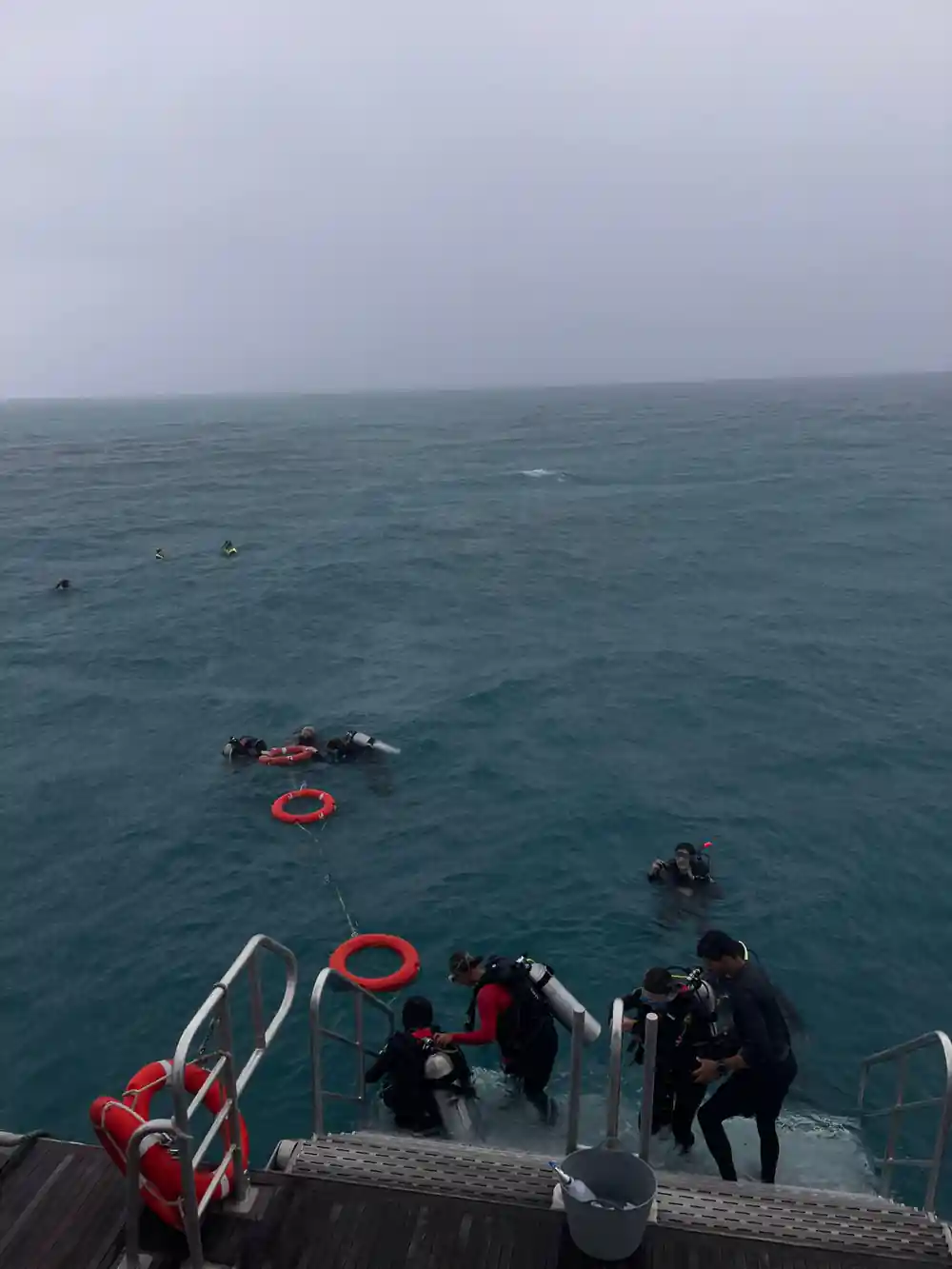
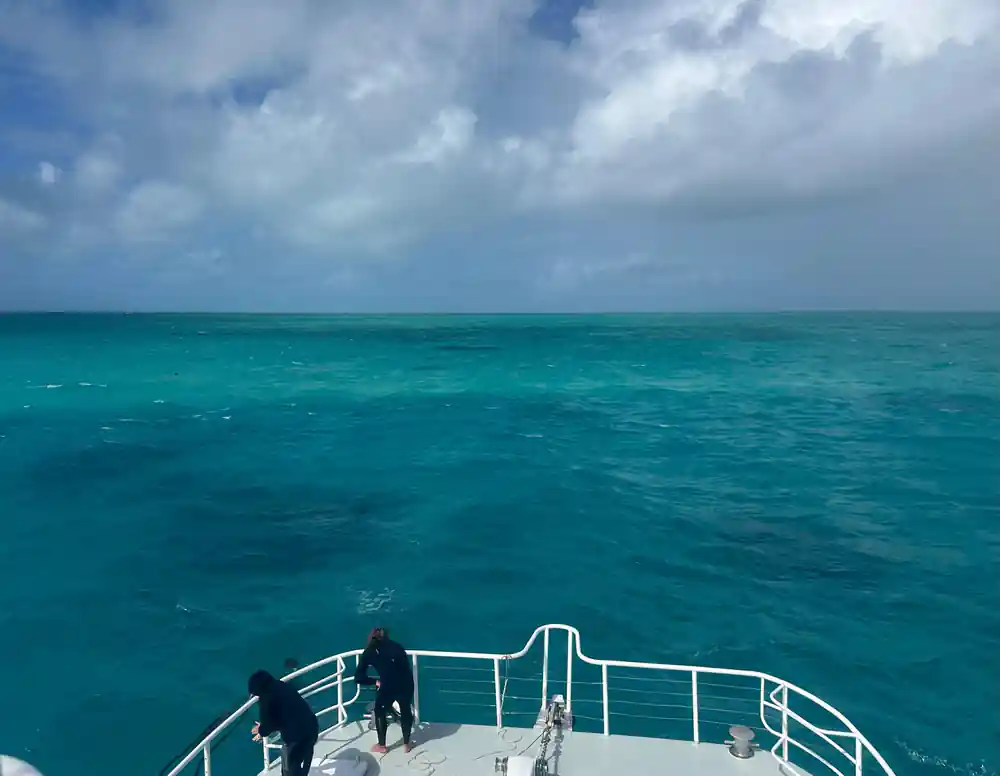
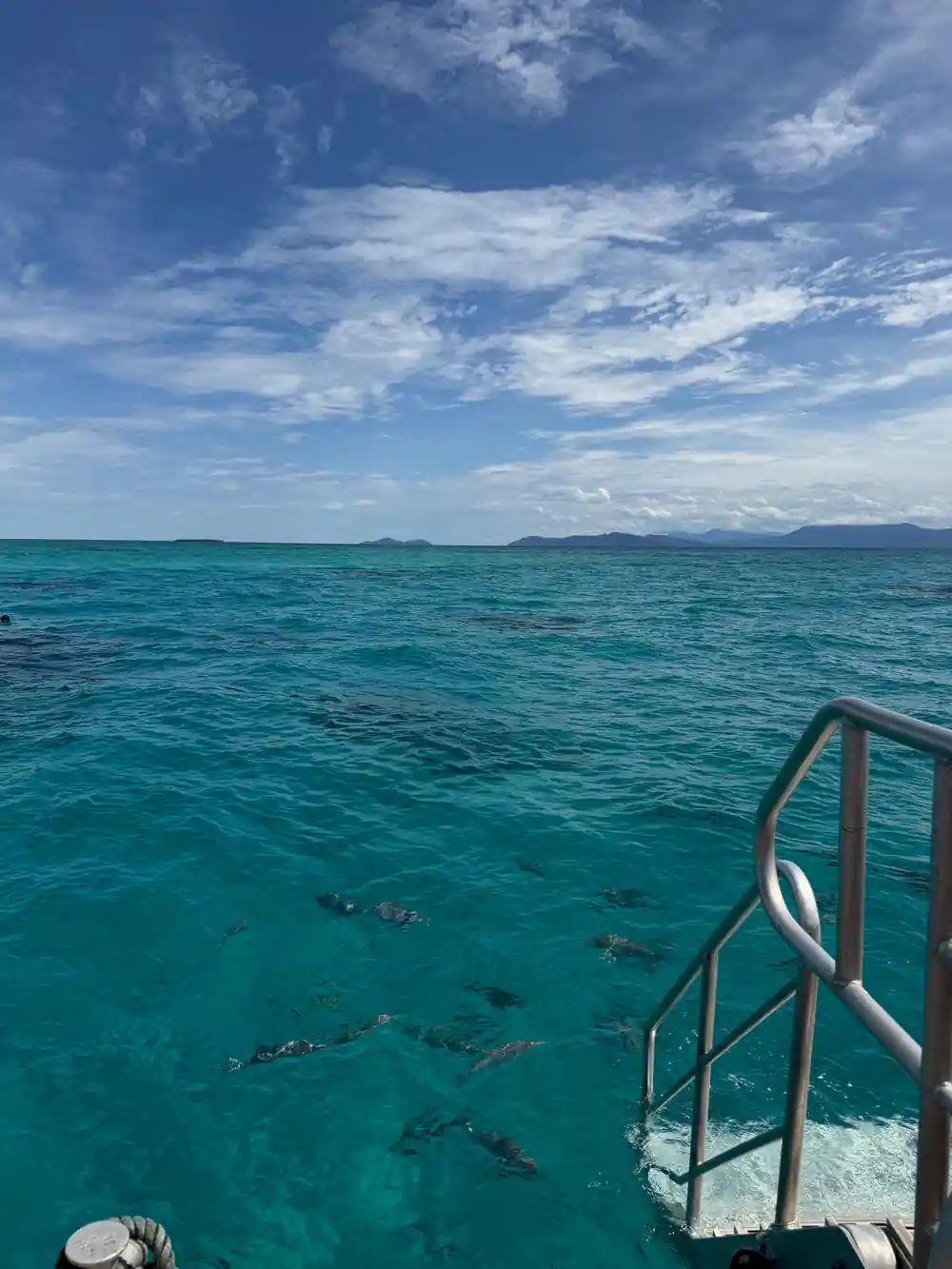
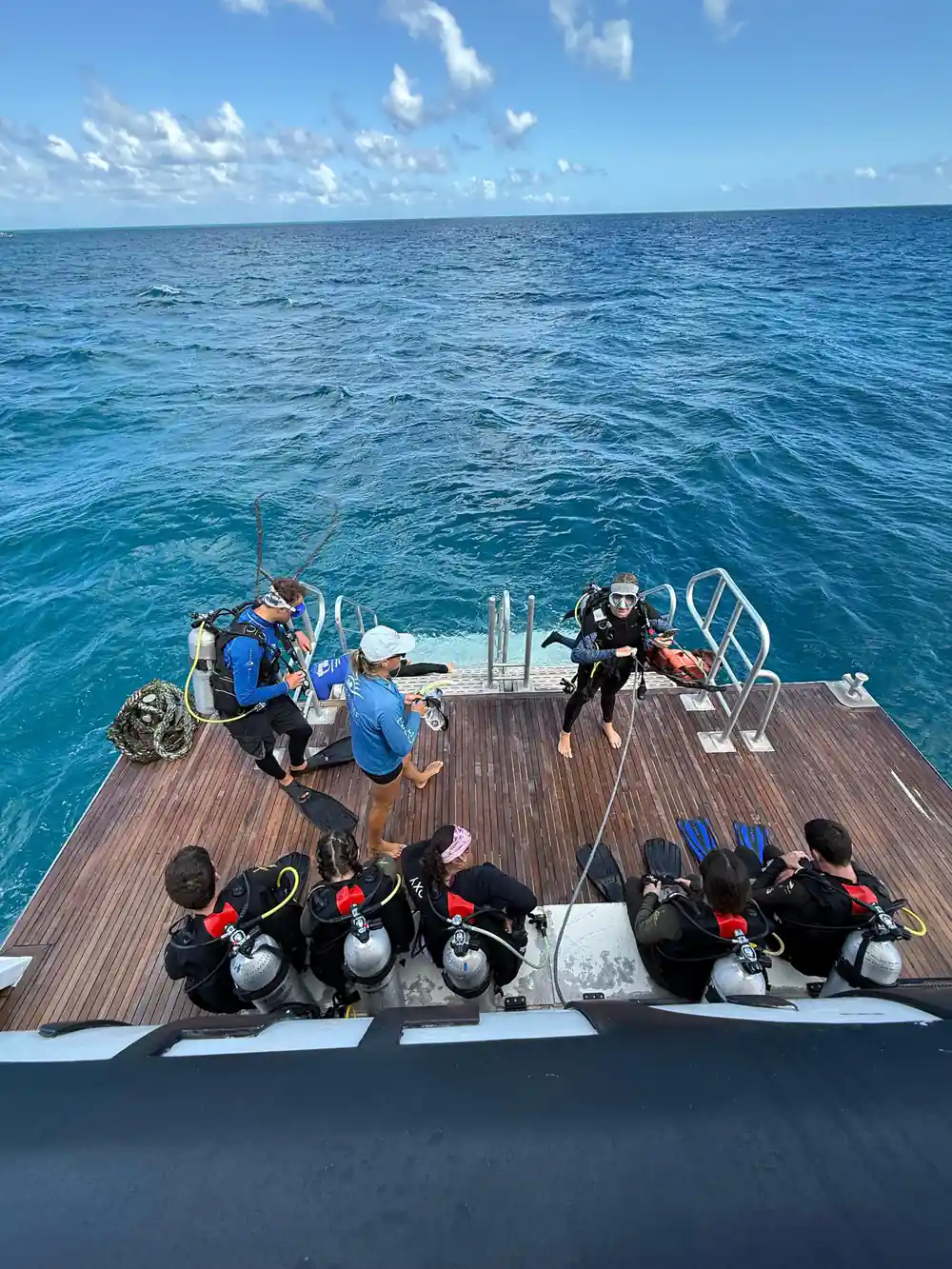
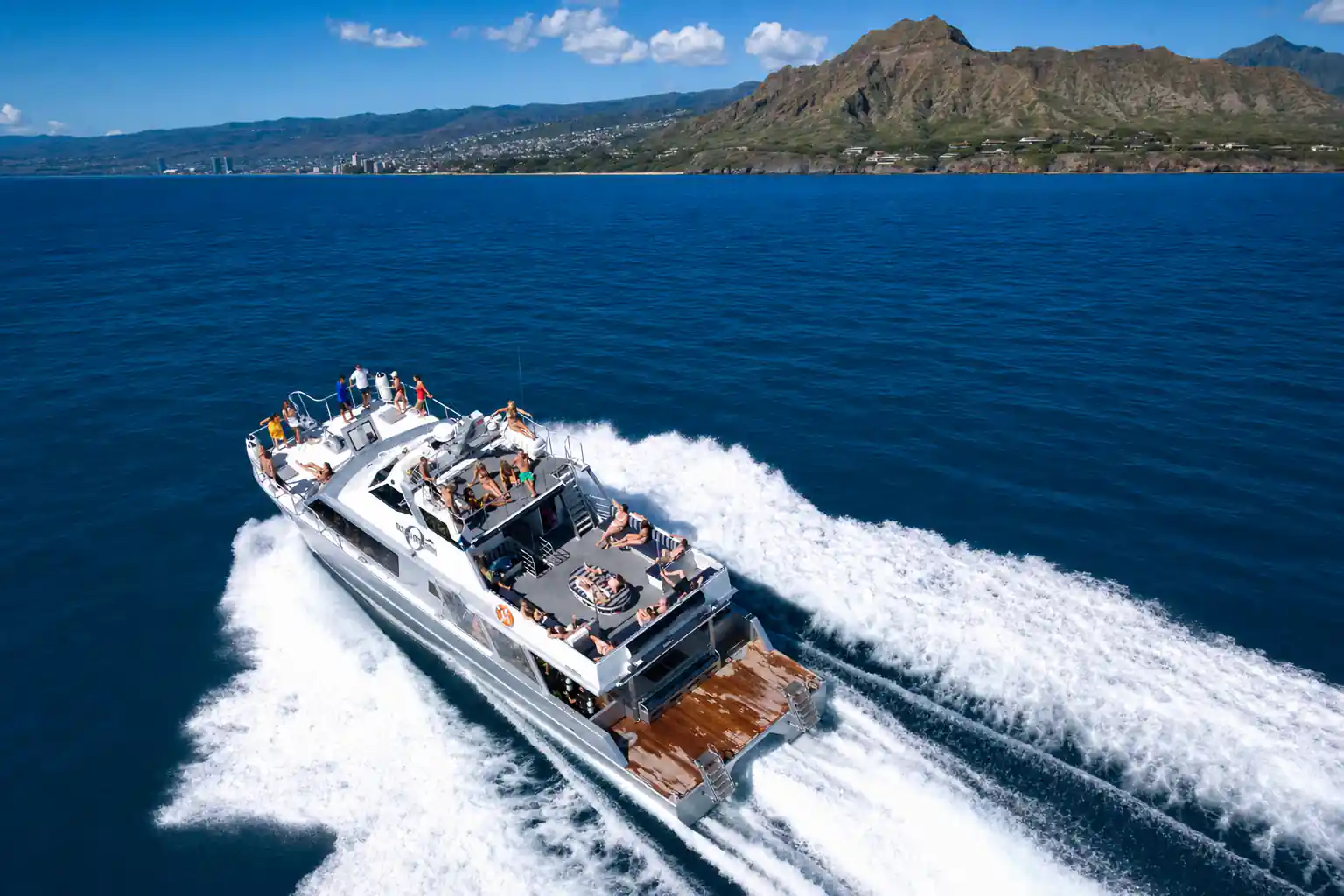
The boat departs from the Reef Fleet Terminal at 1 Spence Street, Cairns, and heads out through the Coral Sea on its way to the reef.[6] In that time the colours change from harbour grey to a palette of blues and greens, and the first coral heads appear as dark shapes beneath the surface. On the way, the crew briefs you on the reef, the creatures you are likely to see, and the simple rules that keep both you and the reef safe.
What you will not find here are glass tanks and scheduled feedings. The reef works on its own rhythms. Currents bring nutrients, fish graze and clean, and predators keep everything in balance. Your job is simply to float and watch.
Corals in shallow water and on the drop-off
The snorkel stops here are very different in character. One is a steep coral face dropping away into deeper water, where schooling fish swirl along the edge of the drop-off. The other is a shallow, sheltered garden of hard and soft corals, where sunlight filters through clear water and lights up every colour.
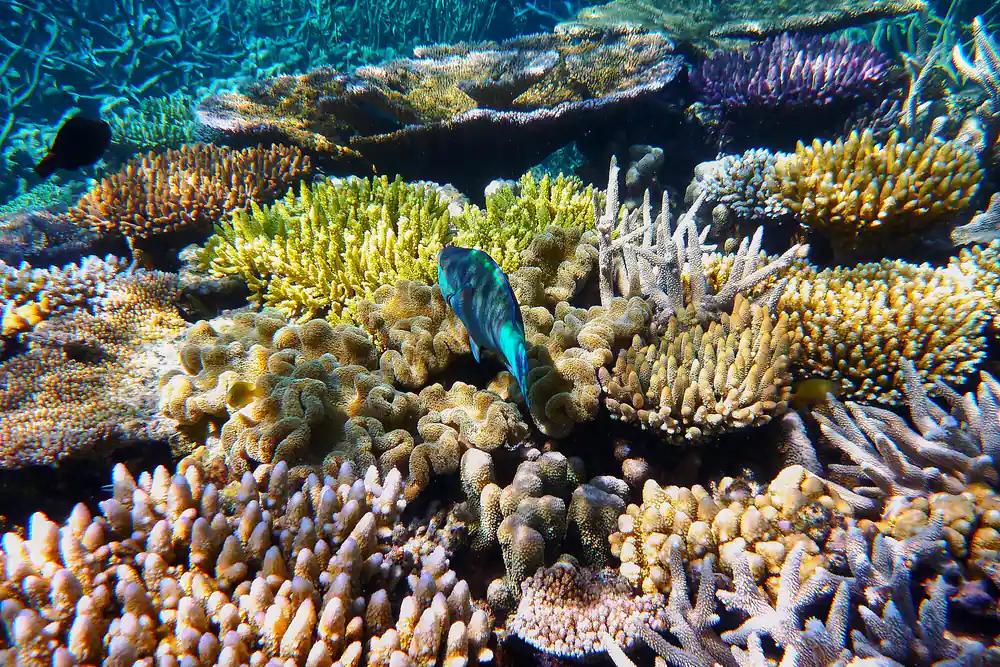
You will see staghorn corals branching like antlers, boulder corals the size of cars, and soft corals that pulse and sway with the current. The reef is resilient. The Australian Institute of Marine Science reports that hard coral cover on the northern Great Barrier Reef increased from 30.0% in 2025 to 35.1% in 2026.[9]
Water temperatures average 24°C in winter and 29°C in summer.[5] In the shallow water around the cay, the coral is bright and healthy, and the sandy channels between coral heads are full of life.
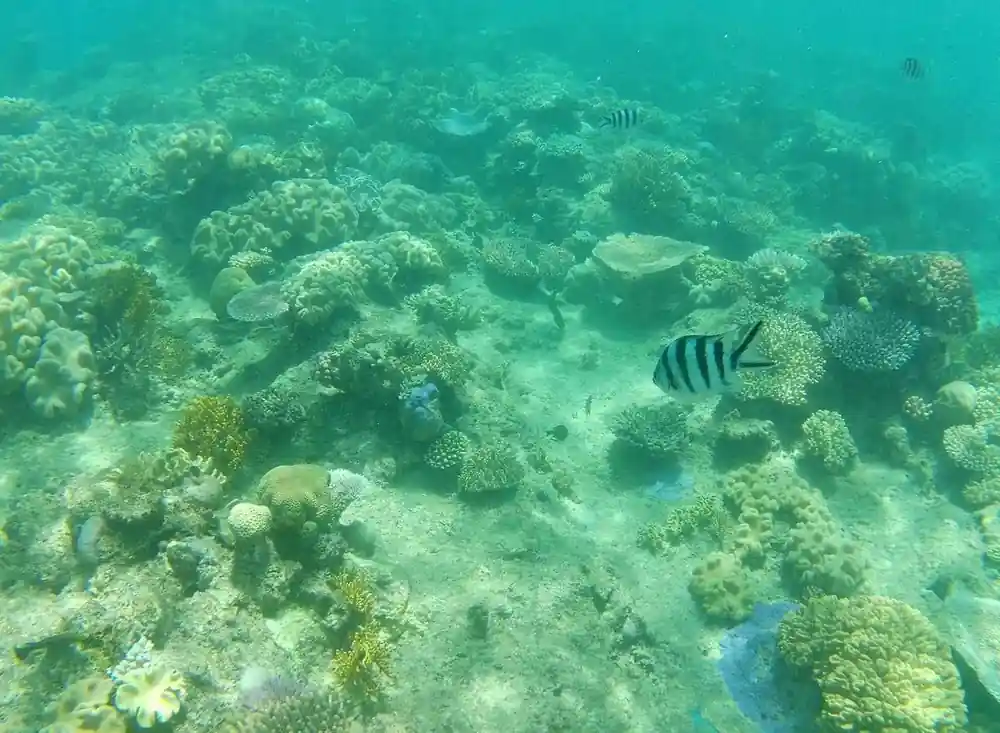
A snorkeller drifts above a dense field of hard and soft coral.
The reef fish you will see
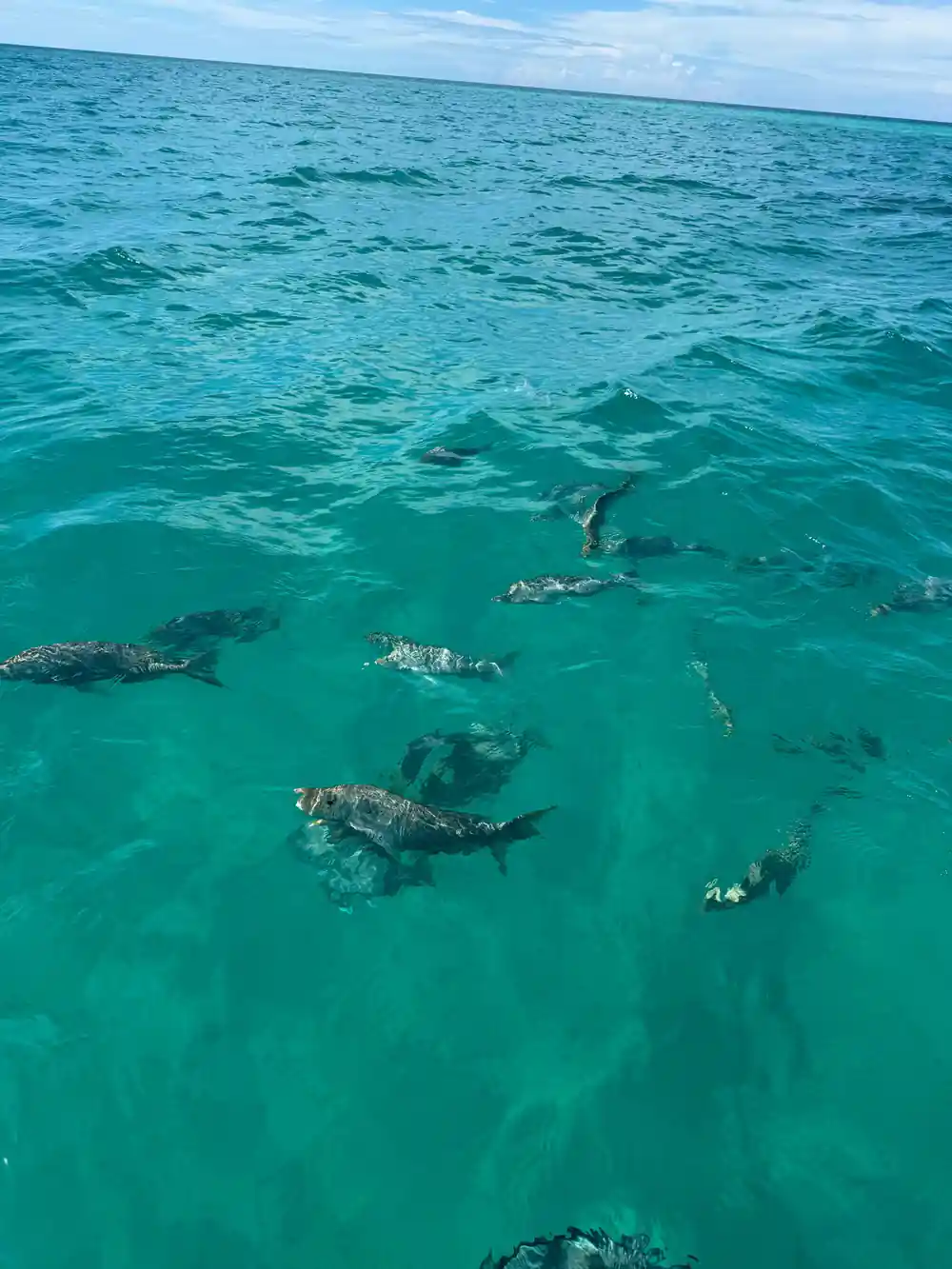
Snorkellers here are surrounded by fish from the moment they enter the water. Parrotfish in electric blues and greens crunch on coral and leave white sand in their wake. Clownfish dart between the tentacles of anemones, and angelfish and butterflyfish patrol the coral heads in pairs.
On the shallow sandy patches near the cay you may see goatfish stirring the seabed with their barbels, and schools of baitfish that shimmer and turn like a single creature. Larger predators are never far away, drawn by the same abundance of food. Trevally and tuna slice through the baitfish schools, and occasionally a giant trevally will shadow a snorkeller, curious about the strange creature floating above.
For photographers, the variety is a gift. The fish are used to snorkellers and rarely bolt, so you can drift slowly and let them come to you. A small camera on a wrist strap is ideal, and the current often does the work, so clear shots are easy to frame.
Turtles, barracuda and stingrays
Green turtles are the celebrities of the reef. They glide past snorkellers with slow, deliberate wingbeats of their front flippers, pausing to graze on seagrass or to surface for air. You will often see one resting on a coral ledge or swimming just below the surface, apparently indifferent to the people floating above. Keep your distance and let them set the pace; they will often stay nearby for several minutes.
Barracuda hang in silver packs near the reef edge, their jaws half-open and their bodies motionless in the current. They look menacing but are usually just waiting for small fish to stray. Stingrays lie half-buried on white sand, their bodies rippling as they sense your shadow, and then they lift off the bottom in a graceful wave.
The shallow lagoon around the cay is particularly good for rays and turtles, because it gives them room to move. If you float still and quiet, a turtle may swim right past you. That moment, when a wild animal chooses to share your space, is what makes this reef special.
from US$202
The Outer and Coral Cay Snorkel and Dive Cruise from Cairns is the tour covered on this page.[1]
Reef sharks and other things in the water
Reef sharks are part of the reef's natural balance, and you are more likely to see them than you might expect. They are shy and usually keep their distance, patrolling the drop-off where the reef wall meets deep water. Whitetip and blacktip reef sharks are the species you are likely to see, and they rarely pay snorkellers any attention. Seeing one glide past is a thrill, and their presence is a sign of a healthy reef.
Between November and May is marine stinger season in tropical Queensland, when the risk from dangerous jellyfish is higher.[10] Wear a stinger suit then, and follow the crew's advice. The suits feel a little strange at first, but they keep you safe and still let you move freely. Stingers may also be present at other times of year.[10]
You may also see giant clams with vivid blue mantles, sea cucumbers sliding across the sand, and the occasional octopus squeezing between coral heads. The reef rewards patience. Float still and watch, and the small details reveal themselves.
The drift snorkel and sand cays
A drift snorkel is a lovely way to see a long stretch of reef. The current carries you along while you float and watch, so you do not need to kick hard. The fish swim alongside as if escorting you down the reef, and the crew stays close so you always have a safe exit.
Sand cays are part of the reef's magic. The cruise's route takes in Upolu Reef and an outer reef site, and in the shallows the reef's colours are visible right from the surface.[1] It is a genuinely wild place. The shallow water is full of fish grazing on algae and coral, and the whole scene plays out exactly as it has for centuries.
The cay itself is a tiny strip of white sand with a few low plants, and the water around it is warm and shallow. It is a perfect place for a relaxed snorkel or a few minutes of quiet floating. Then the boat moves on to the deeper outer reef site, where the drop-off and the big fish live.
Planning your reef day
The cruise runs for 8.5 hours to 1 day, with starting times you can check when you book.[1] A reef environmental management charge of $8.50 per day for a full-day passenger applies.[7] Bring reef-safe sunscreen, a rash vest, and a towel. The boat has shaded areas, and you can bring your own water and snacks.
The dry season is roughly May to October, with sunny skies, low humidity and comfortably warm days.[2] The wet season is roughly December to March.[2] Water temperatures average 24°C in winter and 29°C in summer.[5] During marine stinger season, from November to May, wear a stinger suit.[10]
Reserve now and pay later, and cancel free up to 24 hours in advance if your plans change.[1] Arrive at the Reef Fleet Terminal at 1 Spence Street, Cairns.[6]
Reef site distances and offshore position
Compare Cairns reef day prices
From-prices in US dollars from GetYourGuide listings:[1][3][4][14]
When to book
Planning your reef day
Pick your date
Check availability for starting times when you book.[1]
Reserve your spot
Book online with reserve now and pay later.[1]
Find the terminal
Head to the Reef Fleet Terminal, 1 Spence Street, Cairns.[6]
Ride out to the reef
Settle in for the ride out to Upolu Reef and an outer reef site.[1]
Snorkel the stops
Explore Upolu Reef and an outer reef site.[1]
Ready to swim with the reef's wild residents?
from US$203Reserve now & pay later