The quick version
- Green Island cruises from Cairns include glass bottom boat or snorkelling options from US$78[1].
- The Outer and Coral Cay Snorkel and Dive Cruise starts from US$202 and lists a duration of 8.5 hours - 1 day[2].
- Reef boats from Cairns leave from the Reef Fleet Terminal at 1 Spence Street[3].
- Outer reef trips from Cairns list a duration of 8.5 hours - 1 day[2], while Green Island is about 45 minutes by boat.[4]
- May to October is the drier window for reef trips.[5]
| Made for | Example tour | From price | |
|---|---|---|---|
| Green Island glass boat | Best for dry reef views | Green Island Glass or Snorkel[1] | from US$78[1] |
| Green Island combo | Better if you want snorkel as well | Green Island Snorkel and Glass[6] | from US$109[6] |
| Full-day island trip | Budget choice from Cairns | Full-Day Green Island Cruise[7] | from US$77[7] |
| Outer reef active day | Coral cay snorkel and dive | Outer and Coral Cay Cruise[2] | from US$202[2] |
| Small group snorkel | More crew attention on the water | Small Group Snorkelling[8] | from US$163[8] |
Full day passenger (pax) $8.50 per day for:
Dry above, alive below: choose your reef view
Plan ahead
- Book now and pay later on the Outer and Coral Cay Snorkel and Dive Cruise[2].
- From US$78 Green Island glass/snorkel[1], from US$202 outer reef[2].
- This trip lists free cancellation up to 24 hours in advance for a full refund[2].
- Reef boats from Cairns depart from the Reef Fleet Terminal at 1 Spence Street[3].
On the water
- Wear a hat, sunglasses and a long-sleeve rashie for a day on open water.
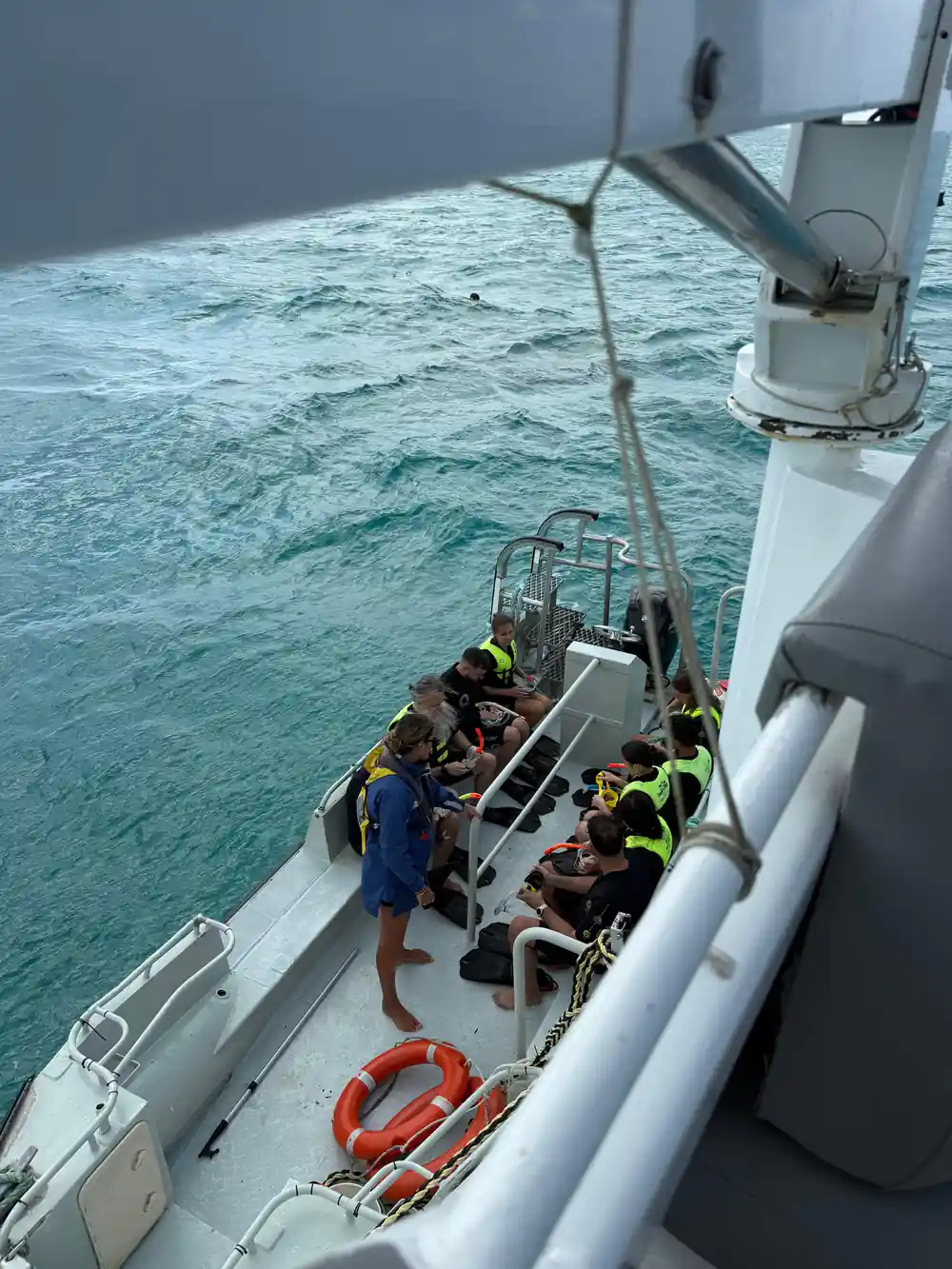
- Expect a proper sea crossing to reach outer reef sites before the day's activities start.
- Reef water off Cairns averages 29°C in summer and 24°C in winter.[9]
- Ask crew where to sit for the best view; they know the day's conditions.
Why a Glass Bottom Boat Is a Smart Start
The Great Barrier Reef spans more than 2,300 kilometres along the northeast coast of Australia and is made up of some 3,000 individual coral reefs.[10] A glass bottom boat gives you a dry, steady way to see part of that world without a mask, fins or swimming experience. You sit above a window set into the hull, look down, and watch coral gardens and fish pass underneath. It is a practical first taste for travellers who are not sure they want to get in, and a nice break between snorkel sessions for those who do. On a calm morning the water flattens out and the window becomes a clear picture frame, with soft light picking out the colours below.
From Cairns, the logistics are easier than many visitors expect. Reef boats depart from the Reef Fleet Terminal at 1 Spence Street.[3] A catamaran heads to an outer reef pontoon that sits 47 km offshore on the outer reef.[11] If you choose an island-based glass bottom boat trip, Green Island sits 27 km east of Cairns and takes about 45 minutes by catamaran.[4] Deciding where you want to spend your water time matters more than worrying about transfers. The terminal is easy to find near the waterfront, and the crew handle boarding once you check in.
The Glass Bottom Boat Is Included on Some Cairns Cruises
Not every reef tour includes a glass bottom boat; read the listing carefully. A Cairns tour called Green Island Cruise, Glass Bottom Boat or Snorkel starts from US$78 and gives you the choice of staying dry in the window or getting into the water.[1] Another named Green Island, Snorkelling and Glass Bottom Boat starts from US$109 and includes both activities in the day.[6] If the boat below the surface is your priority, choose a trip that names it in the title. Titles on booking pages are usually accurate, though it still pays to open the full itinerary and confirm how much time you get at the cay.
The featured tour takes the opposite approach: it is a snorkel and dive cruise rather than a dry-window tour. The Cairns: Outer and Coral Cay Snorkel and Dive Cruise starts from US$202 and lists a duration of 8.5 hours - 1 day.[2] It is designed for active reef time, with an English-speaking instructor on board.[2] That means you can plan a mixed holiday: one day watching the reef through glass, another day snorkelling or diving the outer reef. For a first visit, combining the two gives you a gentle introduction and a proper reef adventure in one trip.
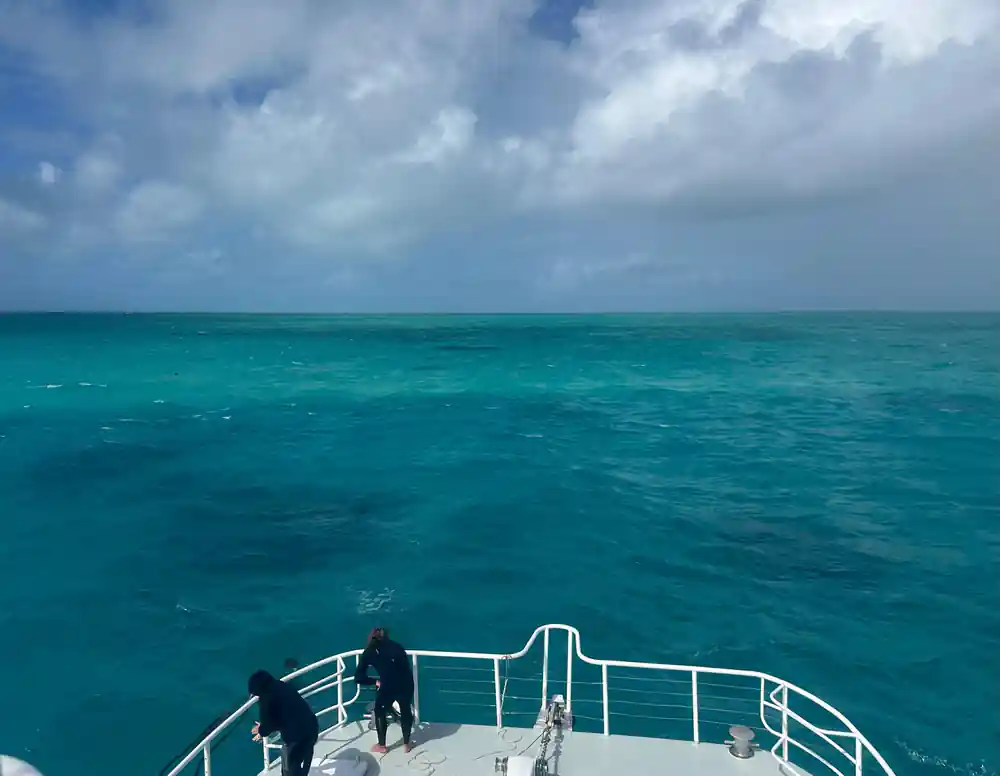
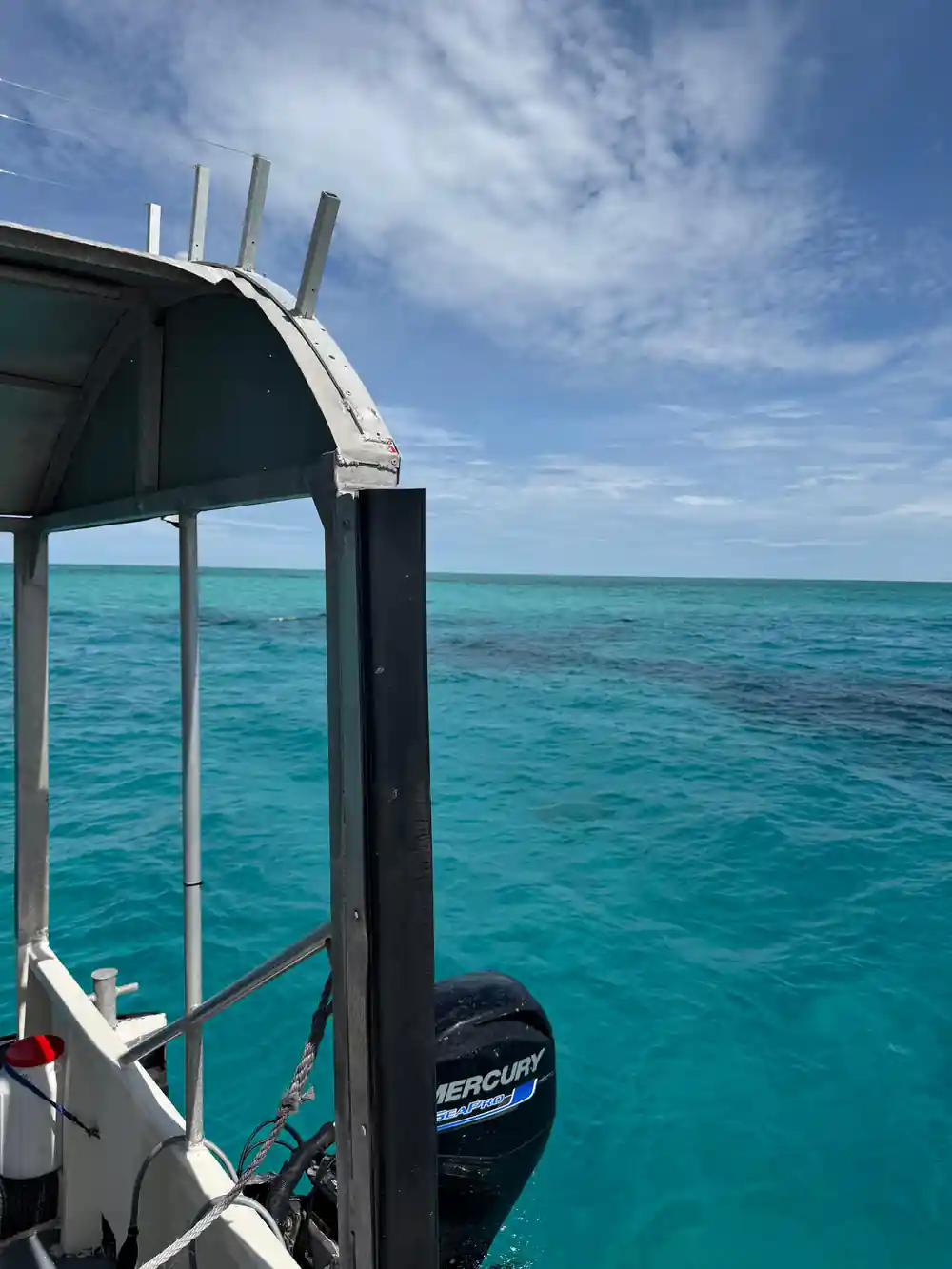
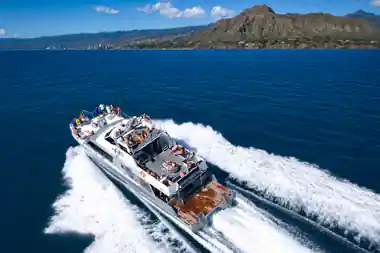
A catamaran cuts a wake across shallow reef water while passengers watch marine life below.
The Transfer You Need to Manage
Where your boat leaves from is one detail travellers often forget. Reef boats from Cairns depart from the Reef Fleet Terminal at 1 Spence Street.[3] It is a busy working terminal. Give yourself time to find the correct check-in desk, use the bathroom and settle any paperwork before boarding. The same planning applies whether you choose a glass bottom boat day or a snorkel cruise; the ride itself is part of the day. Arriving a little early also leaves time to watch the boats come in and get a feel for the day's breeze.
Once you are on the water, the distances are manageable. The outer reef pontoon sits 47 km offshore on the outer reef.[11] Green Island is the short-hop option at about 45 minutes.[4] Fitzroy Island is also about 45 minutes by ferry and sits 29 kilometres south-east of Cairns.[12] If you are prone to seasickness, pick a smooth morning departure and ask the crew for advice. A straightforward route and an experienced captain help calm nerves if the sea is lively.
What the Window Actually Shows You
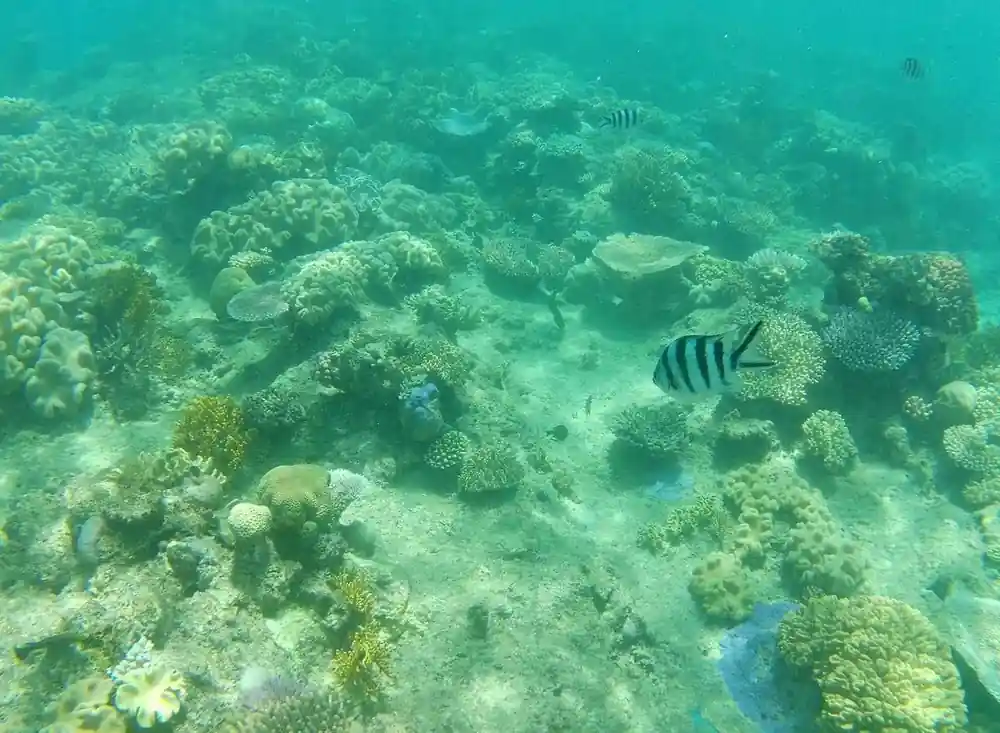
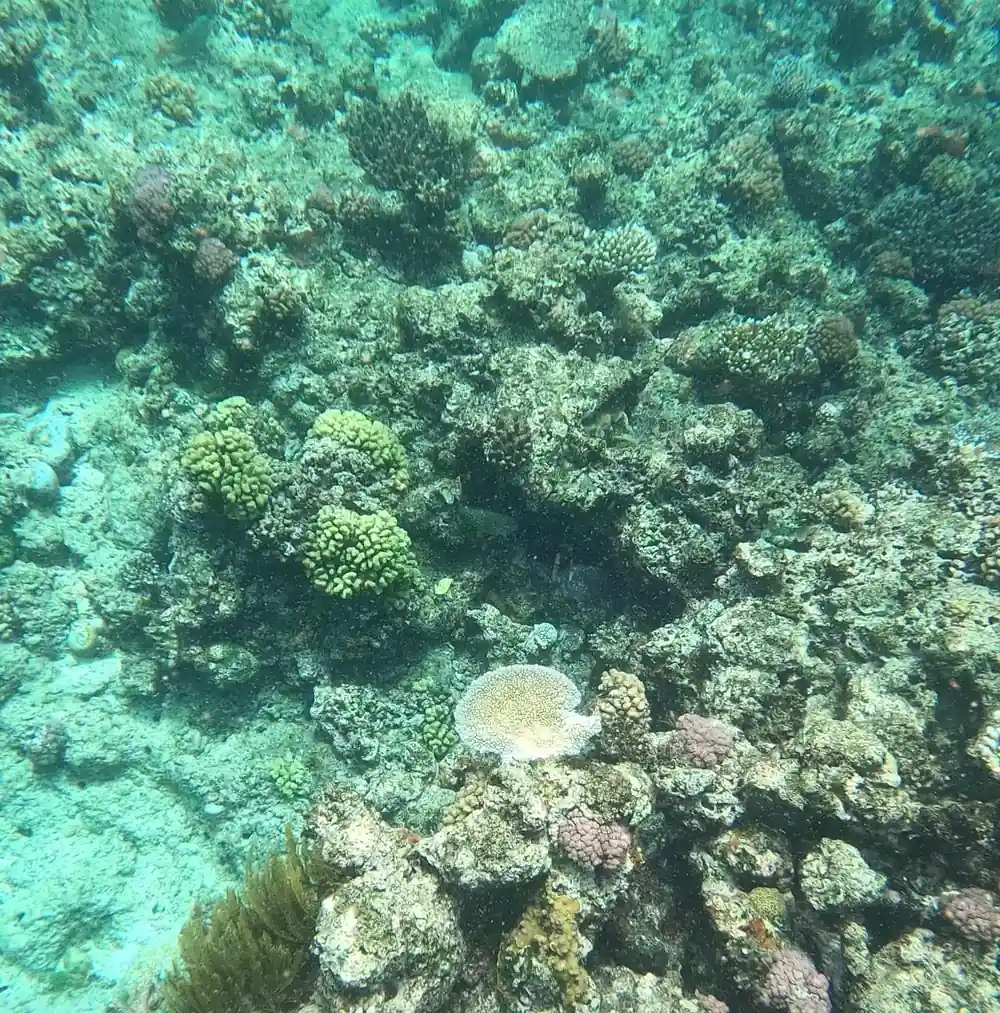
Slide into a seat over the window and the reef opens below you. From the glass you can watch hard coral structures, soft coral fans and the fish that move between them. The latest AIMS monitoring reports that hard coral cover on the northern Great Barrier Reef increased from 30.0% in 2025 to 35.1% in 2026.[13] That is a snapshot of the broader reef, not every site, but it is a useful sign for divers choosing where to go. Look for the changes in colour and shape across the sea floor; the reef is never the same twice.
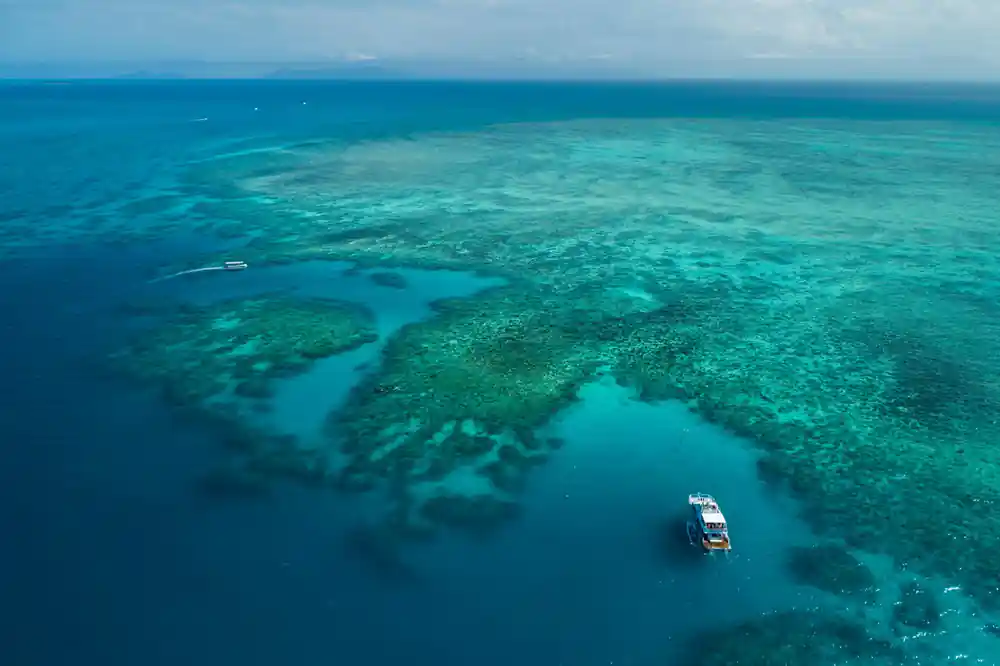
The featured tour visits Upolu Reef and the coral cay area. Upolu Cay is a small, low sand cay, a pale crescent against deep blue water. In the drier months from May to October, visibility is often at its best, which means you can sometimes make out coral formations from the boat before you even enter the water.[5] A glass bottom window gives you the same underwater view in comfort. On a clear day, the turquoise water makes the sand cays stand out sharply against the deeper blue of the open sea.
from US$78
A glass bottom boat day from Cairns is available from US$78[1], while the Outer and Coral Cay Snorkel and Dive Cruise starts from US$202[2].
Glass Versus Being in the Water
Watching the reef through glass is like looking at a moving nature documentary: clean, safe and dry. The window does not replace the feeling of floating face down among fish, but it is ideal for slow mornings, for children, or for anyone not comfortable swimming. If you do want the wet version, look for a cruise with snorkelling equipment and an instructor, and choose a day when conditions feel calm. There is no need to choose once for the whole trip; you can do a dry session and a wet session in the same holiday. A short ride in the glass boat is a gentle way to warm up before you turn your attention to the mask and fins.
Average water temperature on the reef off Cairns is 29°C in summer (December to February) and 24°C in winter (June to August).[9] That gives you a sense of the seasonal range you may encounter. The featured cruise is an 8.5 hours - 1 day trip.[2] It gives you time for several short snorkels rather than one rushed dip. In the tropics, the water side of the equation is usually the highlight. Even on a winter morning, the air warms quickly once the sun is fully up.
Whether It Works for Children
A glass bottom boat works well for children. The activity is instantly visible: sit, look down, point at fish. There is no snorkel mask to adjust, no fins to kick, and no salt water in the mouth. The window is usually low; small ones can kneel or sit with an adult's help. Keep turns short and give older children a chance too. The gentle motion and clear water are usually enough to hold attention for short spells at a time. A parent can hold a toddler on a lap while still leaving room for the next child to take a turn.
If you combine the glass boat with a snorkel stop, plan for a shorter swim first and save the dry view for later. Children who are nervous in open water often prefer watching from above before deciding to get in. Ask crew members where they recommend sitting; they see families every day. For younger children, pack a change of clothes, a towel and plenty of snacks. The reef day should feel relaxed, not like a checklist. Let the day unfold at their pace; a happy child makes the whole trip easier.
If You Cannot Swim or Want to Try Scuba
If you cannot swim, a glass bottom boat is the simplest way to experience the Great Barrier Reef without entering the water. You can still see coral, fish and clear turquoise water through the window, and you avoid the stress of a mask and snorkel. For a first reef trip, this approach lets you enjoy the scenery and decide later whether you want closer contact. You can also pair a calm flat-bottom boat ride with a beach stop where you can wade rather than swim. On a cay, the shallows let you wade if you want to feel the water without full immersion.
If you can swim and want to go further, the Outer and Coral Cay Snorkel and Dive Cruise lists an English-speaking instructor.[2] It is available from US$202 and can be booked with reserve now and pay later.[2] Free cancellation is available up to 24 hours in advance for a full refund.[2] That flexibility is useful if plans change or the weather makes you reconsider the water. The combination of a guide and a longer day makes it easier for beginners to try their first open-water snorkel with support close by.
Distance from Cairns
Distances from Cairns stated in facts: outer reef pontoon 47 km, Green Island 27 km, Fitzroy Island 29 km.[4][11][12]
Compare reef trip prices
Amounts are from-prices in US dollars from the listed tours: from US$202[2], from US$78[1], from US$109[6], from US$77[7], from US$163[8].
When to plan a glass bottom boat day
Plan your reef day
Choose your view
Book a tour that names glass bottom boat if staying dry matters, or a snorkel and dive cruise if you want active time.
Book ahead
Many listings offer free cancellation up to 24 hours in advance for a full refund, which helps if plans change.[2]
Plan transfers
Reef boats from Cairns depart from Reef Fleet Terminal at 1 Spence Street.[3] Arrive early and bring your booking confirmation.
Pack for sun
A hat, sunscreen, sunglasses and a light layer are the basics for a day on open water.
Choose your seat
Pick a covered spot for shade, and ask the crew where the glass window view is best that day.
Go with the tide
Visibility changes day to day, so have a backup plan if weather turns.
Reserve your spot for a day on the Great Barrier Reef
from US$203Reserve now & pay later