The quick version
- The Great Barrier Reef spans more than 2,300 kilometres and is made up of some 3,000 individual coral reefs.[1]
- Reef boats from Cairns leave from the Reef Fleet Terminal at 1 Spence Street, Cairns.[2]
- Sunlover's Moore Reef pontoon sits 47 km offshore on the Outer Reef.[3]
- Dry season runs May to October; marine stinger season typically runs November through May.[4][5]
- The Cairns Outer and Coral Cay Snorkel and Dive Cruise is from US$202 and includes free cancellation up to 24 hours in advance.[6]
- Top choice Outer and Coral Cay Cruise from US$202 Duration8.5 hours to 1 day[6]Guide languageInstructor in English[6]Reef stopsUpolu Reef and Great Barrier Reef[6]Free cancellationUp to 24 hours in advance[6] Check availability
- Full-Day Tour with Lunch from US$193 Duration8.5 hours[7]Guide languageInstructor in English, Japanese, Chinese, German[7]Reef stopsSaxon Reef and Hastings Reef[7]Free cancellationUp to 24 hours in advance[7] See this tour
- Silverswift from US$216 Duration8 hours[8]Guide languageInstructor in English[8]Reef stopsGreat Barrier Reef stops[8]Free cancellationUp to 24 hours in advance[8] See this tour
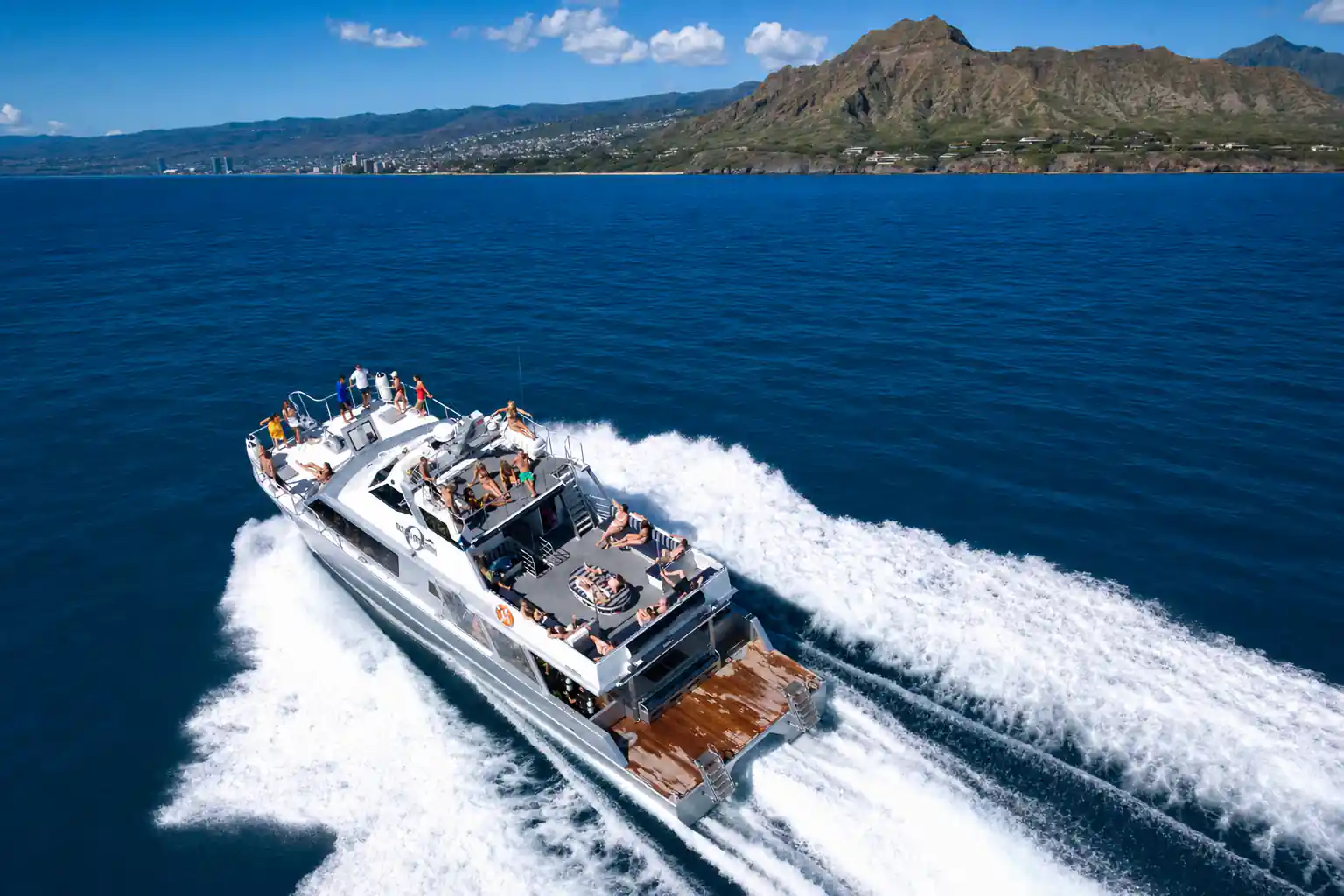
Sunlover’s Moore Reef pontoon sits 47 km offshore on the Outer Reef
A full reef day that works for the right family
Things to check
On the day
- Reef boats depart from the Reef Fleet Terminal at 1 Spence Street, Cairns.[2]
- The cruise runs 8.5 hours to 1 day; check availability for starting times.[6]
- Reef water off Cairns averages 29°C in summer (December-February) and 24°C in winter (June-August).[10]
- Cairns' wet season is roughly December to March and its dry season is roughly May to October.[4]
Snorkelling with children on the Great Barrier Reef
Taking children snorkelling in Cairns starts long before the boat leaves the wharf. The Great Barrier Reef is enormous: it spans more than 2,300 kilometres along the northeast coast of Australia and is made up of some 3,000 individual coral reefs.[1] For a family, that scale is part of the excitement, and it is also a reminder to choose a trip with a sensible amount of travel time.
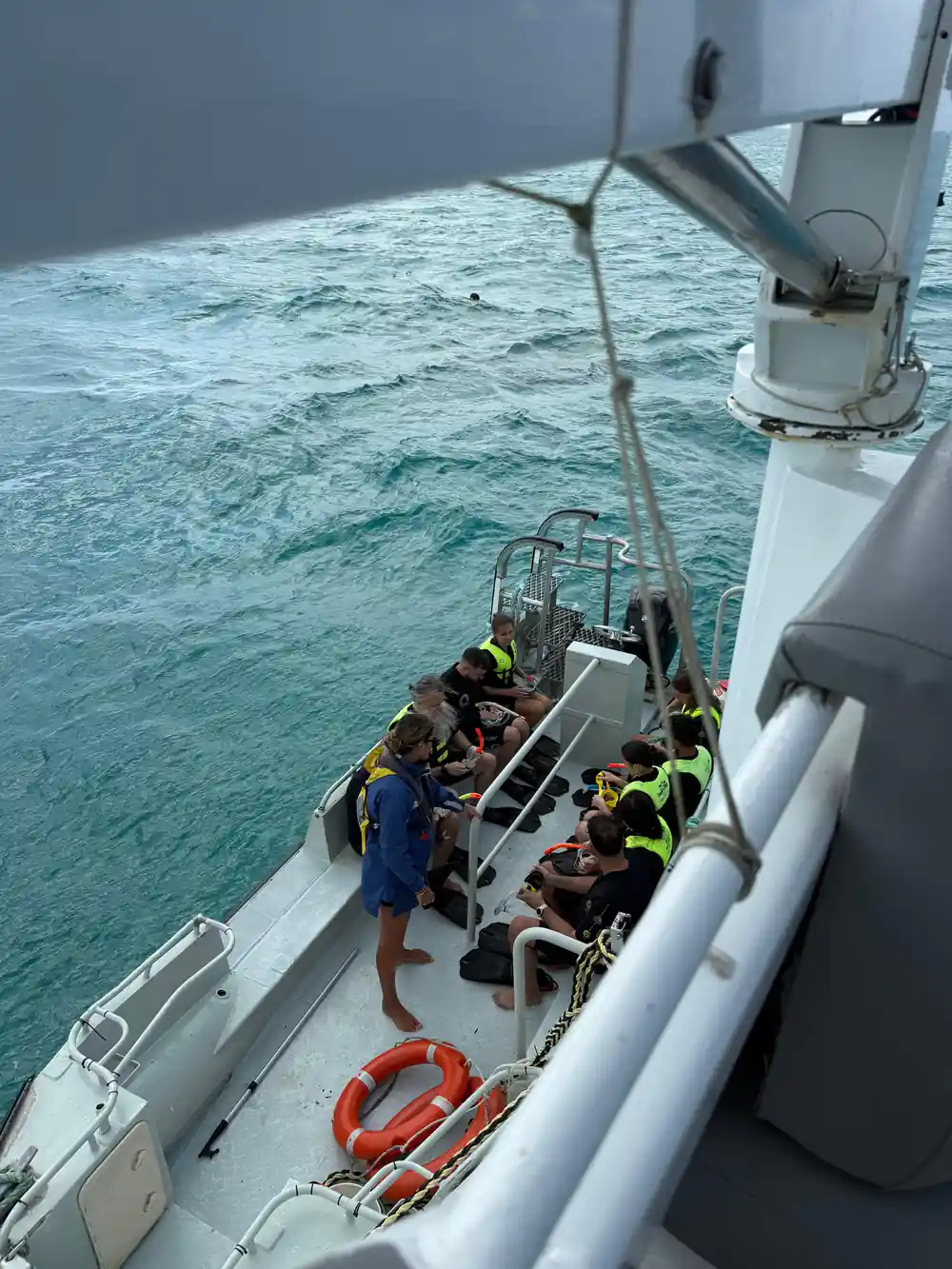
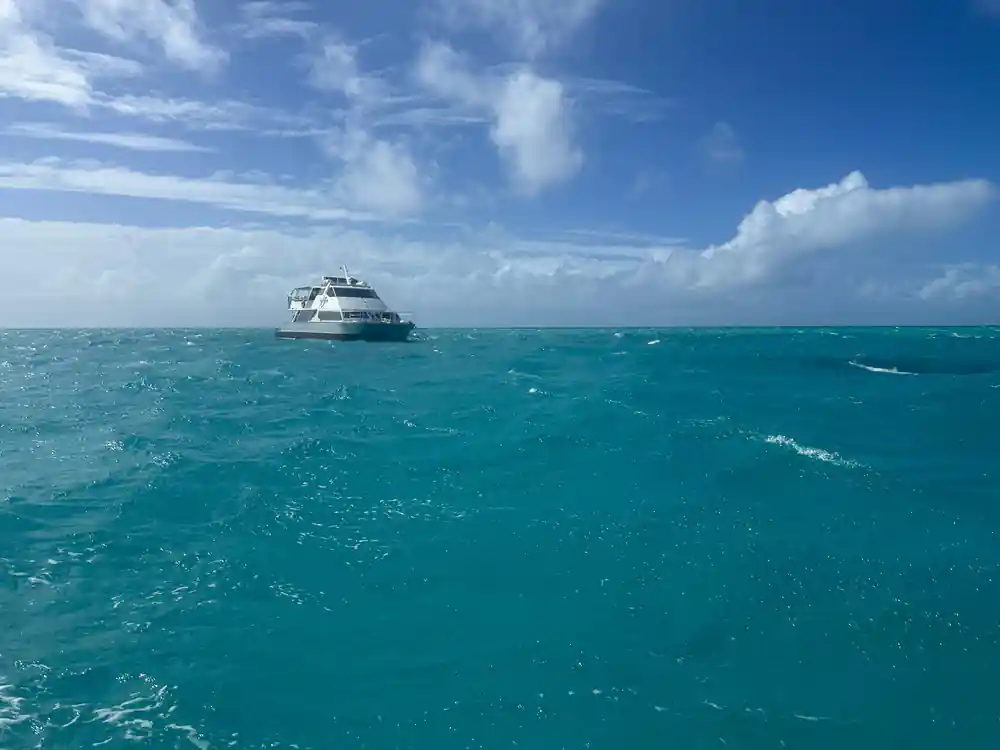
Most reef boats from Cairns leave from the Reef Fleet Terminal at 1 Spence Street, Cairns.[2] Sunlover's Moore Reef pontoon sits 47 km offshore on the Outer Reef.[3] With children, that outward leg is a useful settling-in period: time to find seats, look at the water and get used to the motion before the first snorkel. In good weather the crossing is smooth, but it still pays to sit towards the back of the vessel if anyone in the family feels queasy.
The cruise we recommend from this site, the Cairns Outer and Coral Cay Snorkel and Dive Cruise, is priced from US$202 with a full day of reef time.[6] Its itinerary lists Upolu Reef and the Great Barrier Reef, with a duration of 8.5 hours to 1 day.[6] Families who like the idea of a proper reef expedition will find plenty to keep everyone busy.
The one age rule that actually applies
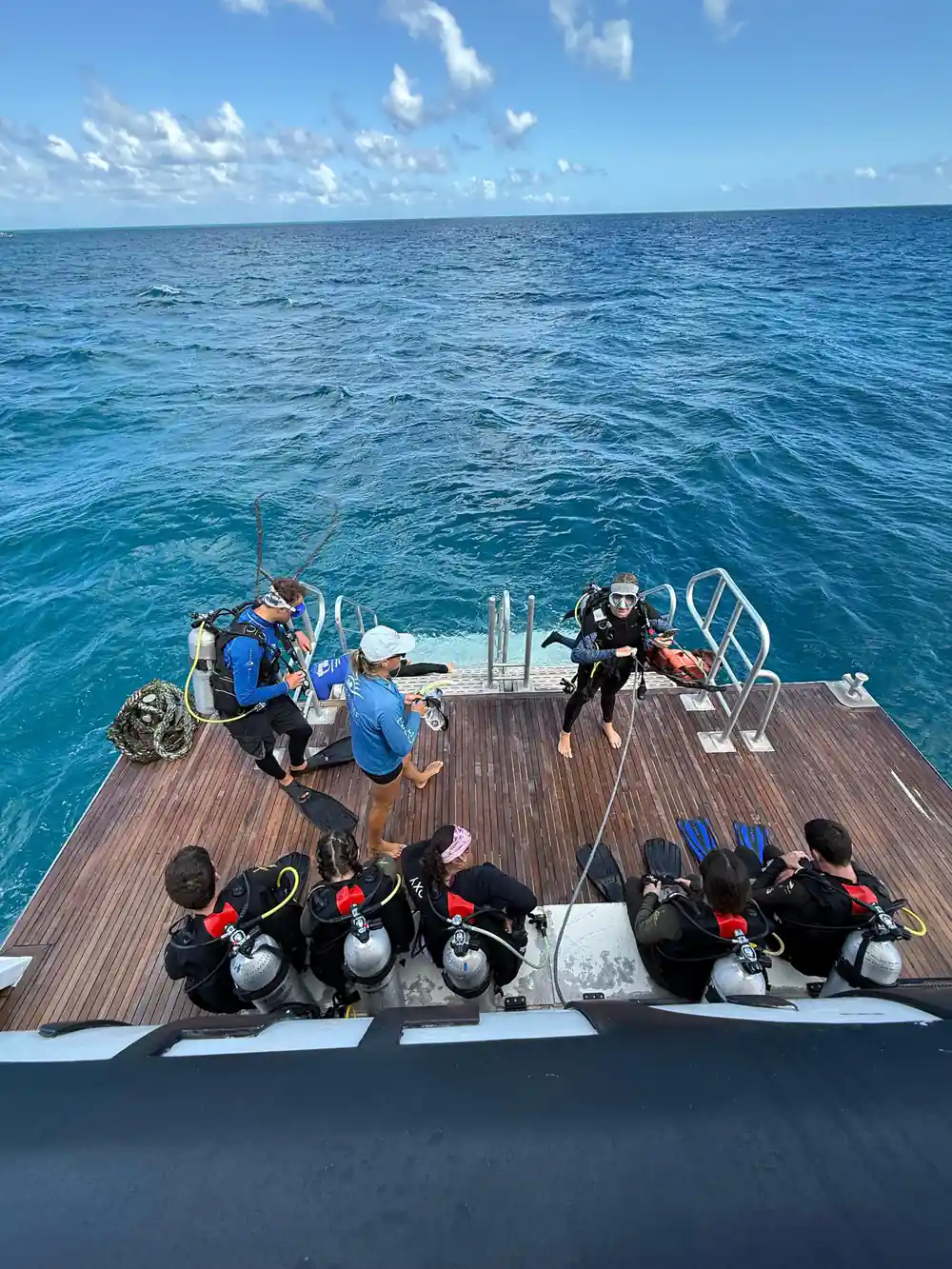
There is no single rule written above a reef boat gangway, but the age rule that matters is simple: the trip should not be longer than your child can comfortably manage. This cruise runs 8.5 hours to 1 day; that is a full day on the water.[6] A toddler who naps well on board may be fine; a restless child who is not used to boats might prefer a shorter outing.
Choose your season with care. Cairns' wet season is roughly December to March, and the marine stinger season in tropical Queensland typically runs November through May.[4][5] Winter and early spring often feel easiest for families, with cooler air and lower humidity. The dry season from May to October brings sunny skies, low humidity and warm, comfortable days perfect for exploring the reef.[4]
Whatever the child's age, reserve with flexibility. The booked tour offers free cancellation up to 24 hours in advance for a full refund, which is a useful safety net if a child wakes up unwell on the morning of the trip.[6]
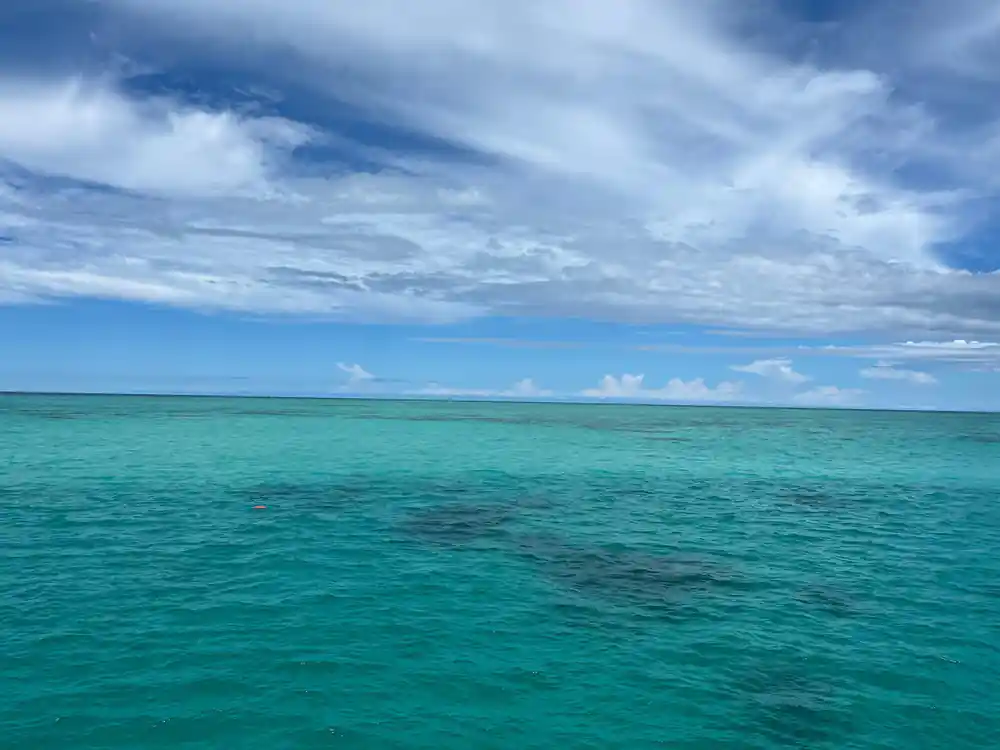
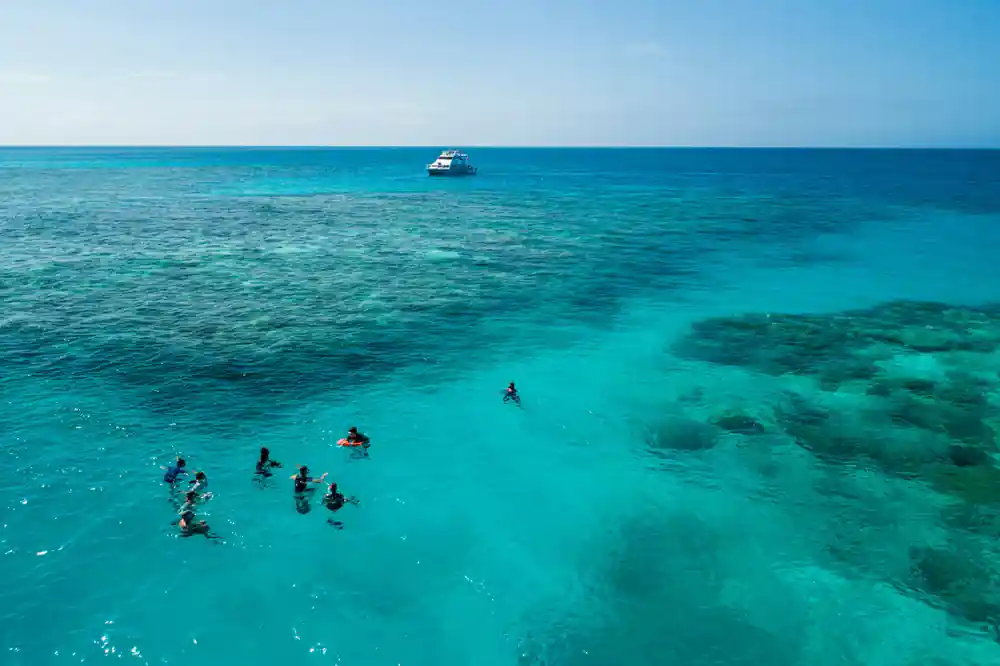
A catamaran glides over shallow turquoise reef water near Upolu Reef.
What children wear in the water
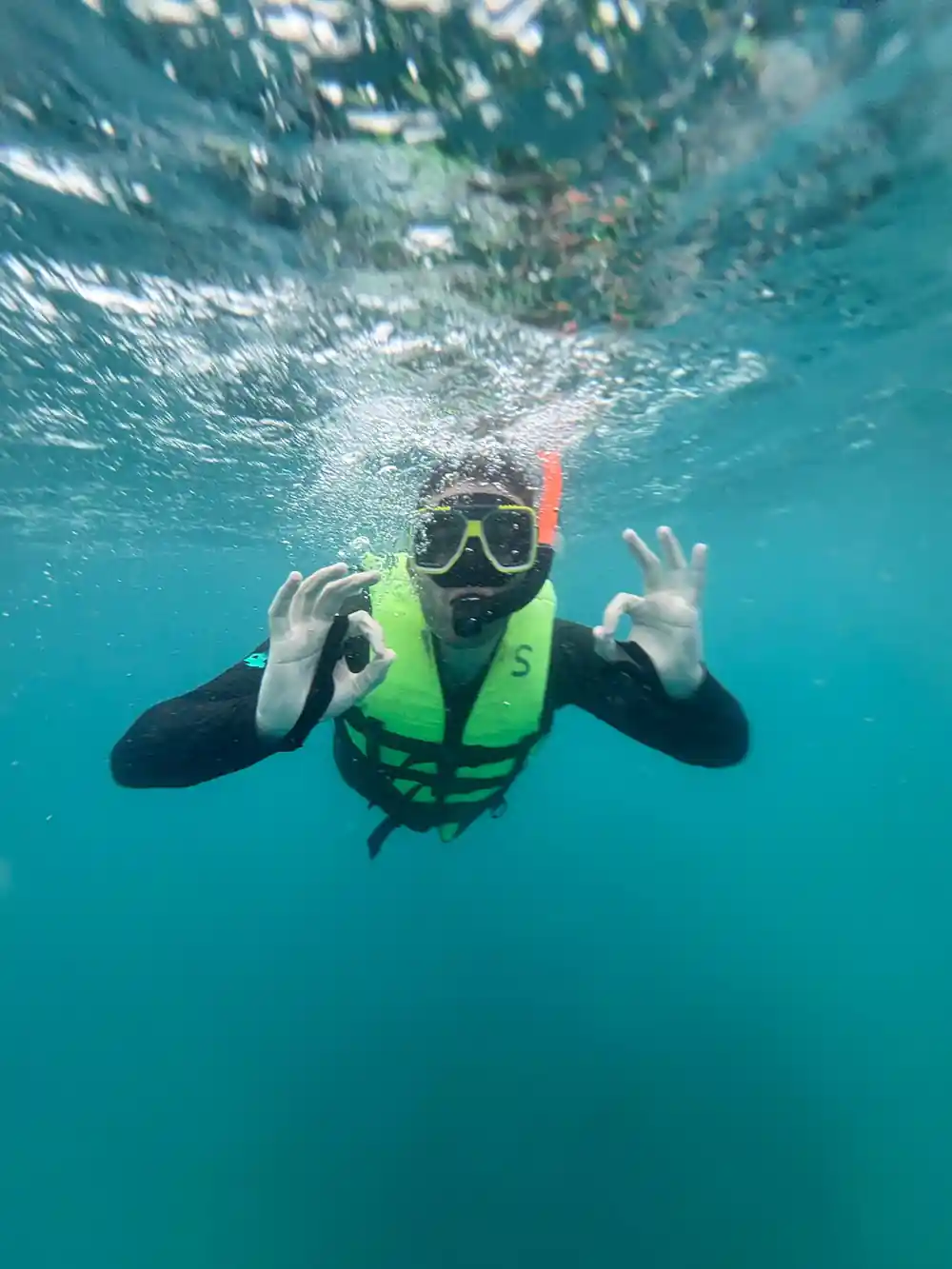
Reef water in this part of Queensland is warm but changeable. The average water temperature on the reef off Cairns is 29°C in summer (December-February) and 24°C in winter (June-August).[10] For children, a light full-length layer is often more comfortable than bare skin because it protects from sun and makes stinger season less stressful.
Pack a swimsuit, a towel, a warm layer for the boat ride and a change of clothes. In Cairns' wet season, roughly December to March, expect hot, humid days and frequent afternoon showers that keep everything lush.[4] A dry change of clothes can rescue the second half of the day. Sun is strong over the water even on overcast days; reapply often.
During the marine stinger season from November through May, follow the crew's advice about protective clothing and safe swimming areas.[5] Reef-safe sunscreen and a hat should be part of every child's bag, along with any favourite flotation aid if the operator allows it.
The glass bottom boat, for a child who will not swim
Not every child wants to put a mask in the water, and that is fine. One easy alternative is a glass-bottom boat, and the Cairns Green Island Cruise with Glass Bottom Boat or Snorkel is one option; it costs from US$78 and runs 5 to 9 hours.[11] Green Island is 27 kilometres off Cairns, with a catamaran crossing of about 45 minutes.[12]
If you choose the outer reef cruise booked from this site instead, remember that its focus is snorkelling and diving. The itinerary highlights Upolu Reef and the Great Barrier Reef; the day is built around being in the water.[6] A child who is happy to watch from the boat will still see the reef from the surface, but a dedicated glass-bottom tour may be a better fit for a confirmed non-swimmer.
For a family with mixed confidence, consider pairing a dry first stop with a snorkel later. The practical thing is to tell the crew about your child's plans and let them suggest the calmest spot for a first try. Younger swimmers often do better with a mask that fits well and a snorkel they have practised in a pool before the trip.
from US$202
The Cairns Outer and Coral Cay Snorkel and Dive Cruise is a full-day catamaran trip with reef stops and free cancellation up to 24 hours in advance.[6]
Rest, showers and space on board
A long day on the water needs a boat with room to breathe. Look for shaded decks, a cabin where a child can nap, and space to move away from the crowd between activities. These are not things a listing always tells you, but they matter for tired children.
The booked cruise is a catamaran day with stops at Upolu Reef and the Great Barrier Reef.[6] The full itinerary shows a sequence of reef stops, which gives children time to recover before the next swim.[6] Use the travelling stretches for quiet time, snacks and a rest. If you are travelling with an infant, a sling or carrier may be useful on the boat.
If you are visiting with a baby or toddler, think about how you will manage nappy changes and feeding on board. Sunlover's Moore Reef pontoon sits 47 km offshore on the Outer Reef.[3] Ask the operator about facilities before you book.
Food for children through the day
Food is central to a good reef day with children. The booked cruise is from US$202, and meal details should be confirmed when you check availability.[6] Some full-day reef tours are listed as with lunch, such as the Cairns Outer Great Barrier Reef Full-Day Tour with Lunch from US$193.[7]
Even when lunch is part of the plan, pack extra snacks and water. The day runs 8.5 hours to 1 day, and children often want small, familiar foods at unexpected moments.[6] Sore tummies on boats are usually less about the boat and more about hunger or thirst. Pack easy-to-eat items like bananas, sandwiches and crackers rather than anything that needs a knife.
For children with allergies or strong food preferences, contact the operator before booking and carry safe backup food. A full-day reef trip is not the moment to rely on unfamiliar menu items.
How to pace a long reef day
The booked tour from this site runs 8.5 hours to 1 day; it is a proper full-day outing; build in natural breaks.[6] The itinerary moves from the boat to Upolu Reef, then the Great Barrier Reef, and then to Upolu Reef again before returning.[6]
Visibility helps, too. On a clear dry-season day, children may spot coral and fish before they even drop below the surface. The dry season runs May to October, and for many families that is a comfortable window for Cairns snorkeling for kids.[4]
Keep the plan simple. Start with a short snorkel, come back to the boat for snacks, and let the reef set the pace. With a little patience, even a cautious child can take home a first reef memory that feels entirely their own.
Reef distances
Distances stated in the facts: Green Island 27 km east of Cairns[12], Fitzroy Island 29 km south-east of Cairns[13], Moore Reef pontoon 47 km offshore[3].
Compare family reef tour prices from Cairns
USD from-prices:[6],[7],[8],[14]. Child fares not listed.
Best times to book a family reef trip
Plan a family reef day
Check the season
Book in the dry season from May to October for clear days and lower humidity.[4]
Decide on time on the water
Sunlover's Moore Reef pontoon sits 47 km offshore on the Outer Reef. Younger children may prefer a shorter outing.[3]
Confirm cancellation
Look for free cancellation up to 24 hours in advance, as the booked tour offers.[6]
Pack for the reef
Expect 29°C water in summer and 24°C in winter; layers and cover-ups help.[10]
Set your meeting point
Check in at the Reef Fleet Terminal, 1 Spence Street, Cairns.[2]
Plan for the stinger season
From November through May, be ready for higher jellyfish risk and follow operator advice.[5]
Ready to make reef memories with your kids?
from US$203Reserve now & pay later